
WILDLIFE CARERS GROUP SUBMISSION Inquiry into Drugs of Dependence (Personal Cannabis Use) Amendment Bill 2018. Closes 20 March 2019
Our Submission has been published on the ACT Legislative Assembly’s website.
Click to access Submission-14-Wildlife-Carers-Group.pdf
Cannabis is an illicit hallucinatory drug with the smoke being involuntarily forced into the lungs of babies, children, non smokers, the animal kingdom, etc causing hallucinations etc and serious health issues.
It is strongly recommended that cannabis only be allowed to be developed in oil form and to be only used for medicinal purposes.
These oils are already readily available in the ACT for patients.
| ACT | 02 6205 0998 | hps@act.gov.au | ACT Health |
Immediate effects
- loss of inhibition
- spontaneous laughter
- quiet and reflective mood
- affected perception including sound, colour and other sensations
- confusion
- altered thinking and memory
- anxiety
- mild paranoia
- altered vision
- reddened/bloodshot eyes
- relaxation
- sleepiness
- reduced coordination and balance
- increased heart rate
- low blood pressure
- increased appetite.
Low to moderate doses
Low to moderate doses of cannabis can produce effects that last 2 to 4 hours after smoking. The effects of ingested (eaten) cannabis usually start within 1 hour. Some of the effects include:
Higher doses
- confusion
- restlessness
- excitement
- hallucinations
- anxiety or panic
- detachment from reality
- decreased reaction time
- paranoia.
Long-term effects
Long-term cannabis use can have many effects on an individual:
Brain: Impaired concentration, memory and learning ability.
Lungs: Smoking cannabis can result in a sore throat, asthma and bronchitis.
Hormones: Cannabis can affect hormone production. Research shows that some cannabis users have a lowered sex drive. Irregular menstrual cycles and lowered sperm counts have also been reported.
Immune system: There is some concern that cannabis smoking may impair the functioning of the immune system.
Mental health: Cannabis use, especially heavy and regular use, may be linked to a condition known as a “drug-induced psychosis”, or “cannabis psychosis”….’
https://www.mydr.com.au/addictions/cannabis-marijuana-what-are-the-effects
2018 update ‘….Marijuana Extracts
Smoking THC-rich resins extracted from the marijuana plant is on the rise. People call this practice dabbing. These extracts come in various forms, such as:
- hash oil or honey oil—a gooey liquid
- wax or budder&mdsh;a soft solid with a texture like lip balm
- shatter—a hard, amber-colored solidThese extracts can deliver extremely large amounts of THC to the body, and their use has sent some people to the emergency room. Another danger is in preparing these extracts, which usually involves butane (lighter fluid). A number of people have caused fires and explosions and have been seriously burned from using butane to make extracts at home.3,4.
How does marijuana affect the brain?
Marijuana has both short-and long-term effects on the brain.
Short-Term Effects
When a person smokes marijuana, THC quickly passes from the lungs into the bloodstream. The blood carries the chemical to the brain and other organs throughout the body. The body absorbs THC more slowly when the person eats or drinks it. In that case, they generally feel the effects after 30 minutes to 1 hour.
THC acts on specific brain cell receptors that ordinarily react to natural THC-like chemicals. These natural chemicals play a role in normal brain development and function.
Marijuana overactivates parts of the brain that contain the highest number of these receptors. This causes the “high” that people feel. Other effects include:
- altered senses (for example, seeing brighter colors)
- altered sense of time
- changes in mood
- impaired body movement
- difficulty with thinking and problem-solving
- impaired memory
- hallucinations (when taken in high doses)
- delusions (when taken in high doses)
- psychosis (when taken in high doses)
Long-Term Effects
Marijuana also affects brain development. When people begin using marijuana as teenagers, the drug may impair thinking, memory, and learning functions and affect how the brain builds connections between the areas necessary for these functions. Researchers are still studying how long marijuana’s effects last and whether some changes may be permanent.
For example, a study from New Zealand conducted in part by researchers at Duke University showed that people who started smoking marijuana heavily in their teens and had an ongoing marijuana use disorder lost an average of 8 IQ points between ages 13 and 38. The lost mental abilities didn’t fully return in those who quit marijuana as adults. Those who started smoking marijuana as adults didn’t show notable IQ declines.5
In another recent study on twins, those who used marijuana showed a significant decline in general knowledge and in verbal ability (equivalent to 4 IQ points) between the preteen years and early adulthood, but no predictable difference was found between twins when one used marijuana and the other didn’t. This suggests that the IQ decline in marijuana users may be caused by something other than marijuana, such as shared familial factors (e.g., genetics, family environment).6 NIDA’s Adolescent Brain Cognitive Development (ABCD) study, a major longitudinal study, is tracking a large sample of young Americans from late childhood to early adulthood to help clarify how and to what extent marijuana and other substances, alone and in combination, affect adolescent brain development. Read more about the ABCD study on our Longitudinal Study of Adolescent Brain and Cognitive Development (ABCD Study) webpage.
A Rise in Marijuana’s THC Levels
The amount of THC in marijuana has been increasing steadily over the past few decades.7 For a person who’s new to marijuana use, this may mean exposure to higher THC levels with a greater chance of a harmful reaction. Higher THC levels may explain the rise in emergency room visits involving marijuana use.
The popularity of edibles also increases the chance of harmful reactions. Edibles take longer to digest and produce a high. Therefore, people may consume more to feel the effects faster, leading to dangerous results.
Higher THC levels may also mean a greater risk for addiction if people are regularly exposing themselves to high doses.
What are the other health effects of marijuana?
Marijuana use may have a wide range of effects, both physical and mental.
Physical Effects
- Breathing problems. Marijuana smoke irritates the lungs, and people who smoke marijuana frequently can have the same breathing problems as those who smoke tobacco. These problems include daily cough and phlegm, more frequent lung illness, and a higher risk of lung infections. Researchers so far haven’t found a higher risk for lung cancer in people who smoke marijuana.8
- Increased heart rate. Marijuana raises heart rate for up to 3 hours after smoking. This effect may increase the chance of heart attack. Older people and those with heart problems may be at higher risk.
- Problems with child development during and after pregnancy. One study found that about 20% of pregnant women 24-years-old and younger screened positive for marijuana. However, this study also found that women were about twice as likely to screen positive for marijuana use via a drug test than they state in self-reported measures.9 This suggests that self-reported rates of marijuana use in pregnant females is not an accurate measure of marijuana use and may be underreporting their use. Additionally, in one study of dispensaries, nonmedical personnel at marijuana dispensaries were recommending marijuana to pregnant women for nausea, but medical experts warn against it. This concerns medical experts because marijuana use during pregnancy is linked to lower birth weight10 and increased risk of both brain and behavioral problems in babies. If a pregnant woman uses marijuana, the drug may affect certain developing parts of the fetus’s brain. Children exposed to marijuana in the womb have an increased risk of problems with attention,11memory, and problem-solving compared to unexposed children.12 Some research also suggests that moderate amounts of THC are excreted into the breast milk of nursing mothers.13With regular use, THC can reach amounts in breast milk that could affect the baby’s developing brain. More research is needed. Read our Marijuana Research Report for more information about marijuana and pregnancy…..’
- https://www.drugabuse.gov/publications/drugfacts/marijuana
- As you are aware, we have been strongly lobbying the Government to urgently ban tobacco.
Toxic Carcinogenic emissions: Cigarettes/tobacco: BAN TOBACCO.
The no smoking laws legislation was drawn up by a smoker who was just covering up for himself and his smoking colleagues which has therefore always been inadequate to deter the smokers from illegal smoking, yet alone to stop smoking altogether.
October 1999 – Phillip Morris admits evidence shows smoking causes cancer: Philip Morris Admits Evidence Shows Smoking Causes Cancer
The public, including children and babies are forced to involuntarily smoke as they inhale the toxic carcinogenic tobacco smoke committed by smokers in the privacy of their own no smoking property in their back and front yards and their front and back doors that fill the homes with toxic carcinogenic tobacco smoke.
There wouldn’t be any legal issues by banning tobacco in the ACT, instead a trend would be set where other states will follow. In fact other states are already way ahead of the ACT and have stated that they are going to ban tobacco in their states altogether.
Urge to ban tobacco with hefty fines and a criminal conviction that fits the equivalent crimes to heroin and illicit drugs.
Lit cigarettes are a lethal weapon.Impact smoke has on the environment and smokers, including non smoker’s health:
The Government has a duty of care to all non smokers, including vulnerable children and babies, by displaying large, clear, permanent fixtures, (nailed in) no smoking signs outside buildings at all the entrances to all buildings, and on every pillar, in all public places that also shows the hefty penalty, along with security’s phone numbers, when non smokers lives are threatened by violent smokers who have no respect for the no smoking laws, and the non smokers lives.
It is not a matter of IF the smokers are going to kill the non smokers, it is a matter of WHEN the smokers are going to kill the non smokers.
Legally, this term is known as premeditated homicide.
Irresponsible cigarette smokers that flick their live cigarettes into the environment are the cause of the majority of fires. Smokers are costing taxpayers trillions of dollars in the fire emergency scheme, with the fire brigade having to run around putting out extra fires. Smokers fall asleep with lit cigarettes and burn down their homes.
Cigarette smoking is a drug addiction, that is also forced on the innocent non smoking victims, which includes vulnerable babies and children.
Every time a smoker lights up a cigarette, they release toxic, some known carcinogens into the atmosphere, that is dangerous to the passive smokers. Smokers are costing taxpayers trillions of dollars in the health scheme, and are forcing extra pressure on hospital beds by slowly killing passive smokers, or 2nd hand smokers with the same smoke related diseases.
Radioactive cigarette smoke- lead-210 (Pb-210) and polonium-210 (Po-210) are poisonous, radioactive heavy metals that research has shown to be present in cigarette/tobacco smoke.
Lead-210 and Polonium-210 come from uranium, an ore that occurs in small amounts in nature, breaks down, that releases radium as radon gas into the atmosphere. Once that occurs, radon gas decays quickly, producing lead-210 (PB-210) and polonium-210 (Po-210), highly radioactive metals known as radon decay products. Radium is also present in phosphate fertilisers that are often used in tobacco farming.
As the radium in soil around tobacco plants releases radon gas, and ultimately the tiny lead and polonium particles float free, they attach to bits of dust and are carried to the surface of tobacco leaves. Because tobacco leaves are covered with thousands of fine hairs, these radioactive chemicals grab hold and remain, that is then inhaled by the smokers and passive smokers, that enters their lungs, causing lung cancer, a decline in health, organ removal, prolonged suffering, unable to breathe, oxygen won’t help you either, because your whole immune system has shut down, your nose is running, bleeding, clotting, it feels blocked, you can’t breathe, you can’t eat, you slowly suffocate to death, releasing the toxic emissions into the atmosphere, and contributing to climate change.
Lead-210 and polonium-210 are insoluble in water, so they are not removed during the cleaning and cigarette manufacturing process.
This is only scratching the surface in the diseases that smoking causes.
Chemicals in cigarettes and cigarette smoke contain poisons, carcinogens and heavy toxic metals.
Cigarettes contain ammonia, (great to clean your toilet with, but not great for your immune system) acetone, (great to remove your nail polish, but not great for your vital organs), hydrogen cyanide, arsenic (great to kill your unwanted rats and mice, however, smokers are also killing themselves and innocent non smokers through passive smoking.)
Carcinogens in cigarettes – a carcinogen is defined as any substance that can cause or aggravate cancer. Approximately 60 of the chemicals in cigarettes are known to cause cancer.
TSNAs – tobacco-specific N-nitrosamines, are known to be some of the most potent carcinogens present in smokeless tobacco, snuff and tobacco smoke.
Benzene can be found in pesticides and gasoline. It is present in high levels in cigarette smoke and accounts for half of all human exposure to this hazardous chemical.
Pesticides are used on lawns and gardens, and inhaled into our lungs via cigarette smoke.
Formaldehyde is a chemical used to preserve dead bodies, and is responsible for some of the nose, throat and eye irritation smokers experience when breathing in cigarette smoke.
Toxic Metals in cigarettes – toxic/heavy metals are metals and metal compounds that have the potential to harm our health when absorbed or inhaled. In very small amounts, some of these metals support life, but when taken in large amounts, can become toxic.
Arsenic is commonly used in rat poison, arsenic finds its way into cigarette smoke through some of the pesticides that are used in tobacco farming.
Cadmium is a toxic heavy metal that is used in batteries.
Poisons in cigarettes – poison is defined as any substance that, when introduced to a living organism, causes severe physical distress or death. Science has discovered approximately 200 poisonous gases in cigarette smoke.
Ammonia compounds are commonly used in cleaning products and fertilisers. Ammonia is also used to boost the impact of nicotine in manufactured cigarettes.
Carbon Monoxide is present in car exhaust and is lethal in very large amounts. Cigarette smoke can contain high levels of carbon monoxide.
Hydrogen cyanide was used to kill people in the gas chambers in Nazi germany during world war 2. It can be found in cigarette smoke.
Nicotine is a poison used in pesticides and is the addictive element in cigarettes.
Passive smoking/environmental tobacco smoke – smoke produced by a smouldering cigarette is known to contain at least 250 toxic chemicals, including 50 cancer-causing chemicals. The smell of cigarette smoke is harming your health, and the environment.
Health diseases from cigarette/tobacco smoke – heart, emphysema, lung cancer, mouth cancer, kidney cancer, cervix cancer and bone marrow, gangrene, blood pressure, cataracts, contributes to the development of osteoporosis, increasing the risk for fracture in the elderly, abdominal aortic aneurysm, acute myeloid leukaemia, pancreatic cancer, pneumonia, periodontitis and stomach cancer. These are in addition to diseases previously known to be caused by smoking, including bladder, esophageal, laryngeal, lung, oral, and throat cancers, chronic lung diseases, coronary heart and cardiovascular diseases, as well as reproductive effects and sudden infant death syndrome.
During 1995-1999, smoking caused approximately 440,000 premature deaths in the US annually, leading to 13.2 years of potential life lost for male smokers, and 14.5 years lost for female smokers.
Ref: Harmful chemicals in cigarettes and health consequences of smoking, the 2004 report of the surgeon general, by terry martin, About.com guide, updated september 08, 2009, and 2004.
Tobacco is responsible for contributing to harmful carbon emissions and accelerating climate change.
“CRUEL ANIMAL TESTING BY TOBACCO COMPANIES.
Most people are fully aware that smoking cigarettes is dangerous to one’s health. With the ever-present Surgeon General Warnings printed on every single tobacco product on the market, you would be hard pressed to have missed it.
It doesn’t necessarily take a doctor or scientist though to realize that breathing in carcinogens on a daily basis is a potentially lethal habit. Common sense tells us that breathing smoke of any kind is bad for our lungs, yet for tens of thousands of dogs in research laboratories around the world — who are forced to ingest cigarette smoke for upwards of ten hours a day — this apparently obvious fact is ignored.
In the tobacco industry’s vain attempt to prove that their product doesn’t actually kill people, they have invested literally millions of dollars into animal testing facilities of their own.
Despite the fact all scientific evidence points to the same conclusion — using cigarettes and other tobacco products leads to cancers, emphysema, birth defects and a host of other physical ailments in humans — tobacco companies and research laboratories continue on with what appears to be not only a complete disregard of scientific findings, but a lack of concern for the lives of other beings.
Inside laboratories built by the tobacco industry, or in contract laboratories, beagle puppies are attached to gas mask-like devices and forced to breath in cigarette smoke for hours on end. After enduring months, if not years, of this torture, the poor, helpless dogs are killed so their lungs and other organs can be examined to study the impact the smoke had on them.
Since all conclusive evidence points to the fact that smoking is harmful for human beings, what could the possible motivation be for torturing and killing non-human animals, such as these dogs? And this horrific treatment is not limited to dogs. Pregnant Rhesus monkeys in these laboratories are forced to breathe in cigarette smoke during the duration of their pregnancy and, shortly before giving birth, the mother and her unborn child will be killed so her body may be dissected and her baby removed to observe the side effects of smoking on pregnancy and fetal development.
The same is true for a host of other species such as mice and rats.
It is hard for me to fathom the consciousness of a person who attaches a gas mask to a puppy’s or pregnant monkey’s face each day. What must go through their minds to enable them to justify such injustice? Unlike other forms of vivisection where a lab technician can delude themselves into believing that sacrificing another species benefits the greater good, those working inside tobacco research laboratories must be all too aware that their “research” will benefit no one other than the tobacco industry’s pockets. “Ref: Care2.Rationale-Intent or Outcome:Ban Tobacco: hefty fines and convictions equivalent to illicit drugs etc. Rehabilitation required for the drug addiction causing withdrawal symptoms.Arguments for:Toxic carcinogenic cigarettes smoke is not only killing smokers, it is also killing non smokers with the same smoke related diseases through secondhand smoke/passive smoking.Arguments against: N/A
Sincerely
LADY NORA PRESTON – Independent Volunteer, began rehabilitating wildlife in the early 1980’s
Founding President – since 2004
Honorary Member – since 2004
Animal Welfare Inspector – since 2004, advice given began in the 1970’s
WILDLIFE CARERS GROUP – (WCG) founded in 2004
Mobile: 0406 056 099
Email: wildlife_carers_group@yahoo.com.au
WILDLIFE CARERS GROUP is a VOLUNTARY INDEPENDENT NON PROFIT COMMUNITY BASED GROUP with no Government funding – Independent – adj. 1. Not governed by a foreign power; self-governing. 2. Free from the control of another or others; self-reliant.
Website: http://wcg.awardspace.com (we’ve been unable to update this website, as hard as a few of us have tried, updates on Facebook and WordPress, some on Twitter)
https://wildlifecarersgroup.wordpress.com/?sn=l
We are also on Facebook, https://www.facebook.com/nora.preston.16 with photos included on the site, and become a friend.
You can now follow us and join us on Twitter http://twitter.com/wildlifecarersg/
http://www.myspace.com/wcginc (not updated)
Check out http://www.myspace.com/wcginc and become a friend.
Support WCG. WCG is an independent, non profit, non government community based charity providing animal/wildlife care, rescue/rehabilitation and is also an animal/wildlife welfare group, providing protection for our wildlife/animals, run solely by volunteers, with no government funding, saving taxpayers money
Aims and Objectives: To promote the general welfare and continued survival of native fauna and flora as an essential element of the environment, and specifically to undertake the specialised care necessary for the rehabilitation of orphaned, sick and injured native birds and other animals, to promote public awareness of the need to conserve existing wildlife species, and an understanding of their particular habitat and feeding requirements.
Disclaimer: WCG and the author do not assume or accept any responsibility and shall not be liable for the accuracy or appropriate application of the information contained in this letter/email/blog/report/article.
WILDLIFE CARERS GROUP SUBMISSION ANIMAL WELFARE LEGISLATION AMENDMENT BILL 2019 (closes 7/2/19)
https://yoursay.act.gov.au/animal-welfare-bill-amendments
The entire animal kingdom, including all aquatic life and all bird life be treated with equal rights as humans. Habeas corpus hearings on behalf of nonhuman animals.
CRIMINAL OFFENCE, CRIMINAL CONVICTIONS, HEFTY FINES, IMPRISONMENT COMMITTED BY THE GOVERNMENT AND THEIR AGENCIES
Ban the sale and use of inhumane glue traps
BRUMBIES KILLING STOPPED
This article shows that Scientific Fraud continues into a trigger happy violent Government and their Department to try and justify the unnecessary killing of Brumbies (wild horses), equivalent to the NATIVE Eastern Grey Kangaroos.
The Canberra Times link to the article below falsely claims that there are 6000 or 7000 Brumbies in NSW that will enter the ACT.
Your evidence is shown in the photo, 1 Stallion, 1 Mare, 1 Foal, showing the true small population, that is your grossly over estimated 6000-7000 wild horses that the Government and their Departments is repeatedly guilty of in what ever animal the are counting.
The small herds of horses are easy enough to safely herd ito corrals and to give to anyone who wants the horses as pets, not to kill. How to introduce a horse to a herd: https://ihearthorses.com/6-tips-to-introduce-a-new-horse-to-a-herd/
Taxpayers money to be spent on setting up a horse rescue team to rescue the Brumbies and to rehome them.
All the damage contamination caused to the water, and the valleys is caused by the Government and their Departments, and not by the horses, pigs, or any other animal that they falsely accuse.
They claim that horses are not native to Australia so they want to kill them, and yet they kill all the NATIVE Eastern Grey Kangaroos, including other native macropods and wildlife, and replace them with hoofed Goats, sheep and cattle that are not native to Australia either. Please refer to the Native Eastern Grey Kangaroos section below.
The Government and their Departments falsely claim and accuse the horses of contaminating the water quality, and the valleys.
Please refer to the CARP section below as the Government want to contaminate our drinking water and waterways by releasing the Carp herpesvirus into our waterways to kill the Carp that will not only cause violent deaths and suffering to the Carp, humans and other wildlife, it will cause mutatations.
The Government and their Departments starve the rivers by diverting the run-off waters into wetlands, ponds, etc., they remove the oxygen from the waters killing all waterlife and vegetation, they weed the waterways that provide the oxygen, food and habitat for all the waterlife.
The Government and their Departments want to continue to abuse and waste taxpayers money on violent killing. Aerial shooting is never humane.
Four years ago it cost NPWS on average $1074 to passively remove a wild horse from the National Park. This cost would be a lot higher today.
Taxpayers money to be spent on Brumbies rescue teams, training and rehoming the Brumbies as pets COST FREE to suitable caring responsible homes.
CRIMINAL OFFENCE, CRIMINAL CONVICTIONS, HEFTY FINES, IMPRISONMENT COMMITTED BY THE GOVERNMENT AND THEIR AGENCIES.
CARP HERPES VIRUS FUNDING AND RESEARCH STOPPED
Please find information below right through to the bottom of the page with links to click on, on the carp herpesvirus to be released into our waterways and the suffering and deaths it will cause.
It is highly recommended that a ban be placed on the funding for this research and the release of the Herpes virus into our waterways.
I am a stakeholder of Fisheries Research and Development Corporation (FRDC) who are still pursuing the release of Herpesvirus 3 into our waterways with NCCP.
Response to NCCP below for you.
The thread of emails below in quotes will show you our correspondence that Carp have responded to followed by our response that you will read first.
It is highly recommended to stop the funding to NCCP and to divert the money to establish the medianimalcare equivalent to Medicare to end animal exploitation and to assist Pensioners and low waged income earners for all veterinary treatments and surgeries to be COST FREE.
“From: Lady Nora Preston <wildlife_carers_group@yahoo.com.au>
To: Carp <Carp@frdc.com.au
Sent: Friday, 4 May 2018, 14:47
Subject: Re: Carp contact form Lady Nora Preston
Good afternoon
Thank you for your response.
Matt Barwick is part of NCCP who contacted Dr Paula.
She is horrified that you would ignore not only her advice but the entire profession who have advised you not to contaminate Australian waters with Herpesvirus 3 that also causes black water and mutations.
Animal Welfare is also a big issue that I quoted from Dr Paula’s letter that shows the suffering it causes to the Carps and other species that are also effected.
The funding for this must immediately stop and put towards establishing medianimalcare equivalent to Medicare to end animal exploitation.
Sincerely
LADY NORA PRESTON – Independent Volunteer, began rehabilitating wildlife in the early 1980’s
Founding President – since 2004
Honorary Member – since 2004
Animal Welfare Inspector – since 2004
WILDLIFE CARERS GROUP – (WCG) founded in 2004
PO Box 3509
WESTON CREEK ACT 2611
Mobile: 0406 056 099
Email: wildlife_carers_group@yahoo.com.au
WILDLIFE CARERS GROUP is a VOLUNTARY INDEPENDENT NON PROFIT COMMUNITY BASED GROUP with no Government funding – Independent – adj. 1. Not governed by a foreign power; self-governing. 2. Free from the control of another or others; self-reliant.
Website: http://wcg.awardspace.com (we’ve been unable to update this website, as hard as a few of us have tried, updates on Facebook and WordPress, some on Twitter)
We are also on Facebook, https://www.facebook.com/nora.preston.16 with photos included on the site, and become a friend.
You can now follow us and join us on Twitter http://twitter.com/wildlifecarersg/
http://www.myspace.com/wcginc (not updated)
Check out http://www.myspace.com/wcginc and become a friend.
Support WCG. WCG is an independent, non profit, non government community based charity providing animal/wildlife care, rescue/rehabilitation and is also an animal/wildlife welfare group, providing protection for our wildlife/animals, run solely by volunteers, with no government funding, saving taxpayers money
Aims and Objectives: To promote the general welfare and continued survival of native fauna and flora as an essential element of the environment, and specifically to undertake the specialised care necessary for the rehabilitation of orphaned, sick and injured native birds and other animals, to promote public awareness of the need to conserve existing wildlife species, and an understanding of their particular habitat and feeding requirements.
Disclaimer: WCG and the author do not assume or accept any responsibility and shall not be liable for the accuracy or appropriate application of the information contained in this letter/email/blog/report/article.
Sent from my iPhone
On 4 May 2018, at 9:49 am, Carp <Carp@frdc.com.au> wrote:
Thank you Lady Preston for contacting the National Carp Control Plan (NCCP) team.
Although not directly sent to the NCCP, we are aware of the letter you refer to written by Dr Paula Reynolds, from Lincolnshire Fish Health Laboratories & Research UK. The NCCP is providing a detailed response to the points raised by Dr Reynolds and we will share this with her in the coming days. Once this has been finalised, I would be happy to provide a copy of the letter to you, as well as share our response on the NCCP website for the public to view.
The NCCP is currently embarking on an exhaustive process to explore the most effective methods to control carp and their impacts on the environment. One option we are exploring is the carp virus. The types of research projects underway by the NCCP include completion of trials testing the susceptibility of non-target species to the carp virus, development of strategies for cleaning up carp if the carp virus is released and studies to estimate carp biomass to help determine how well the virus may transmit through populations, and improve understanding of possible costs of removing them from Australian waterways.
It is only at the conclusion of this research will we be in a position to advise governments on the most appropriate methods to control carp.
We welcome your feedback and will continue to share the findings of each of our research projects with the public via our website www.carp.gov.au as they become available.
Kind Regards,
NCCP Team
National Carp Control Plan
Fisheries Research and Development Corporation (FRDC)
Web: www.frdc.com.au
From: fnc@frdc.com.au <fnc@frdc.com.au>On Behalf Of wildlife_carers_group@yahoo.com.au
Sent: Thursday, 3 May 2018 4:34 AM
To: Carp <Carp@frdc.com.au>
Subject: Carp contact form Lady Nora Preston
Name: Lady Nora Preston
Email: wildlife_carers_group@yahoo.com.au
Location: ACT
Message: Good morning, I received a response from Josephine Laduzko, Secretary, Biosecurity Policy and Response that falsely states that the herpes virus does not kill or effect other species. I refer you to a letter from Lincolnshire Fish Health Laboratories and Research, UK that can be read at this link: https://www.facebook.com/photo.php?fbid=1981126831961027&set=pcb.840428429484083&type=3&theater Matt Barwick contacted Dr Paula Reynolds from the UK who strongly warned Barwick against releasing this CyHV-3 virus in Australian waters because it can’t be controlled with many new strains emerging and that CyHV-3 does infect other species including humans. The CyHV-3 does not kill the Carp cleanly that causes the Carp to sink to the bottom and bleed from necrotic lesions in the gills while open sores erupt all over their bodies. “The fish bleed and rot as they die with their bodies being rapidly overtaken by colonies of secondary infections including Aeromonas, Clostridium botulinum (responsible for fatal botulism), E.coli to name a few. The degraded bodies often float after a few days spreading the impacts further downstream exposing the dead bodies to consumption by wildlife which are in turn impacted by these secondary infections.” “The secondary diseases are disfiguring and fatal if left untreated. These diseases are a very real threat to agricultural livestock, clean up crews and native wildlife in both aquatic and animals depending on using the waterways as their water source.” The link to my correspondence urging to withdraw the funding to NCCP: https://www.facebook.com/nora.preston.16/posts/10209507958529714?comment_id=10209934006780654¬if_id=1525240736200093¬if_t=feed_comment&ref=notif
It is highly recommended to withdraw this funding to NCCP and use it to establish a medianimalcare, equivalent to medicare instead. https://wildlifecarersgroup.wordpress.com/2017/05/15/submission-amended-draft-animal-welfare-and-management-strategy-2017-2022-closes-wednesday-24-may-2017/ “
CRIMINAL OFFENCE, CRIMINAL CONVICTIONS, HEFTY FINES, IMPRISONMENT COMMITTED BY THE GOVERNMENT AND THEIR AGENCIES.
NATIVE DINGOES UNLAWFUL CHANGE OF SCIENTIFIC NAME AND LOSING THEIR NATIVE TITLE
We are rather concerned on information that we have received that you are intending to remove the native status of the Dingoes.
The dingo is a type of dog native to Australia. The first British colonists to arrive established a settlement at Port Jackson in 1788 and recorded dingoes living there with indigenous Australians.
Scientific name: Canis lupus dingo
Mass: 13 – 20 kg (Adult)
Height: 52 – 60 cm (Adult, At Shoulder)
Class: Mammalia
Order: Carnivora
We strongly recommend to disallow these changes and to maintain their full protection as a native species placing them onto the critically endangered list before they are driven to extinction please. Please immediately stop all the killing and the poisoning.
Dingoes maintain a healthy well balanced ecosystem.
A criminal offence by the Government and their agencies leading to CRIMINAL CONVICTIONS, hefty fines, imprisonment.
ACT WILDLIFE UNNECESSARILY KILLING SHOT COCKATOOS.
I was called out for a shot cockatoo in the Belconnen area, even though the vets wanted to kill the cockatoo, the cockatoo was healthy and only needed surgery to remove the pellet, so I went to 2 different vets, and insisted that the 2nd vet perform surgery and remove the pellet. The cockatoo was successfully rehabilitated. There is No need to kill everything, have them treated and rehabilitate them, wildlife are not a liability, they are assets. If they are unreleasable then keep them or give them to someone who wants one or two. Call the Police to report the shooting of the wildlife.
A reminder of unnecessary killings of Cockatoos with pellets in them when they can be removed. https://www.facebook.com/ACTwildlife/photos/a.314206718718776/642128689259909/?type=3&theater
Unreleasable wildlife are necessary to keep to calm down the new incoming wildlife of the same species, for training in identification, etc.
DOGS WELFARE AND OTHER ANIMALS
An immediate Ban on temperament testing on all animals – please refer to https://wildlifecarersgroup.wordpress.com/2017/05/15/submission-amended-draft-animal-welfare-and-management-strategy-2017-2022-closes-wednesday-24-may-2017/.
INHUMANE, BULLYING, HARASSING, TORMENTING THE ANIMALS.
UNLAWFUL TO KILL RESCUED AND HANDED IN ANIMALS TO ANIMAL SHELTERS AND RESCUE GROUPS.
CRIMINAL OFFENCE, CRIMINAL CONVICTIONS, HEFTY FINES, IMPRISONMENT.
TO AVOID EXPLOITATION OF ANIMALS, ANY UNSOLD ANIMALS (THAT ARE TO BE SOLD AT A MINIMUM COST RANGING FROM $1-$20), ARE TO BE GIVEN AWAY FREE TO LOVING CARING SUITABLE RESPONSIBLE OWNERS AND HOMES.
DOG WALKING
To have full control over dogs while walking them in public, reputable dog training classes teach that only 1 dog, 1 person can keep a dog under full control by holding a tight lead at heel position, using both hands to hold the lead, keeping the dog on the left hand side of the dog walker.
It is impossible to be able to keep more than 1 dog under complete control with only 2 hands per person.
For the dogs animal welfare, for the protection of the dog walker’s dog, to prevent dog and people attacks, it is strongly recommended that only 1 (one) dog be allowed to be walked by one person at a time.
Ban the use of long leads and long retractable leads in public places, keeping the dog on a tight lead, close to your body at heel position.
VETS, RSPCA, POLICE – bullying, THEFT, unnecessary euthanasia – THIS ISN’T THE FIRST REPORT AGAINST THE RSPCA:
Below are our recorded events in 2017 in inverted commas to save a Golden Retriever from bullying by Lyneham Vets, the RSPCA that not even the Vet Board stopped.
“Unfortunately we found out on 8/12/17 that The RSPCA have unlawfully euthanased Bianca the young 12 year old Golden Retriever.
My full pedigree German Shepherd lived until he was 18 years old being treated for arthritis, and that was in the 1970’s, 1980’s, 1990 when arthritic treatment was not as advanced as it is today, not as advanced as it will be tomorrow and the future when arthritis will be cured. Bianca still had a good several years left in her.
The suffering and pain she may have suffered was due to the neglect committed by the Lyneham Vet Clinic and the RSPCA who failed to treat Bianca for her arthritis while in their care. If they would’ve immediately given Bianca back to her rightful owner, Bianca would’ve been treated for arthritis and would not have been suffering from pain or anything else.
If you would like to help animals you can Boycott Lyneham Vet Clinic phone no: 6241 3333and the ACT RSPCA. You can report the ACT RSPCA’s own animal abuse and the Lyneham Vet Clinic’s abuse on Bianca with my report below to the ACT RSPCA on animal cruelty ACT mobile number 0407 078 221 and Simon Yates, Animal Care Manager, on (02) 6287 8111. National RSPCA phone number (02) 62828300. You can email this report online by filling out their form to RSPCA Australia: https://www.rspca.org.au/contact-us
You can email the Australasian Veterinary Board Council with this report on the ACT RSPCA and the Lyneham Vet Clinic, include their phone number, at admin@avbc.asn.au. Their phone number is (03)96 207 844. The ACT Vet Board’s phone number is (02)6207 0012, their email address is tccs.vetboard@act.gov.aufor negligence, misconduct, animal cruelty, Animal Welfare, bullying, theft.
The ACT RSPCA is also guilty of promoting and performing animal Circus Acts at the RSPCA that we’ve all worked so hard to have banned in circuses at their 12 Barks of Xmas Carols this weekend. It is illegal to use animals for performing animal circus acts in the ACT. The animals are forced to perform unnatural acts that are not part of their natural behaviour, nor is it part of their natural behaviour to be dressed up in pathetic clothing and attire that is degrading and undignified to the animals. It is inhumane and illegal. Shut down the ACT RSPCA’s Animal performance circus acts.
Save Bianca a Golden Retriever.
On 5/12/17 we received a phone call from a very teary female who informed me that when she went into hospital she left her beloved 12 year old pet with a neighbour.
The neighbour took her dog to her Vet.
When she got out of hospital she went to her Vet to take her dog home.
The Vet refused to give her dog back and told her they were going to euthanase her.
This woman did not surrender her dog to the Vet, her dog was not seized.
I phoned the Vet and asked the Receptionist to give her dog back to the owner.
The Receptionist said that it was an animal welfare matter in the hands of the Police and the RSPCA and that she couldn’t discuss it with me.
The dog owner was treating her dog for arthritis under this same Lyneham Vet Clinic, so there was no neglect or animal welfare breaches by the owner.
The Vet Practice phoned the Police and told them not to let her into the waiting room so that she can’t get her own dog.
The Police acted unlawfully when they failed to instruct the Vet to return the dog to the owner so that she can take her dog to another Vet for a 2nd opinion which is her right.
I phoned the Animal Defenders Office and asked her to phone the Vet and to apply for a Court Injunction, a stay on euthanasia, and for her dog to be immediately returned home to her and to serve the Vet first thing in the morning.
On 6/12/17 I received several tearful phone calls from Bianca’s owner to save her dog.
I phoned the Vet Clinic again and told the Receptionist that the dog is hers and she has the right to take her dog home and to another Vet for a 2nd opinion.
The Receptionist told me she can pick her dog up. I phoned the owner and told her to get her dog.
When she went back the Vet had already called the RSPCA with both the Vet and the RSPCA now committing dog theft since the owner had now returned twice to take her own dog home.
The Vet did not own the dog to give her to the RSPCA, the dog was not surrendered to the Vet, the dog was not seized, the owner does not want the dog euthanased, she has been treating her dog for arthritis.
She has not done anything wrong and neither has the dog.
This is bullying committed by both the ACT RSPCA and the Lyneham Vet Clinic.
I phoned the RSPCA and informed them of all of the above and that this was not an animal welfare matter.
She has another Vet to take the dog too.
I asked the RSPCA not to euthanase the dog.
I then phoned the Police to inform them of the facts and that this is not an animal welfare matter and asked them to seize the stolen dog from the RSPCA and to return the dog to the owner.
Then I phoned the Police Minister’s Office and repeated the facts above.
I spoke personally with Greens Party Animal Welfare MLA ACT Legislative Assembly side bench Caroline LeCouteur to try to save Bianca.
You could try to save Bianca by phoning Canberra/ACT RSPCA, Simon Yates
Animal Care Manager, on (02) 6287 8111, and tell them to give Bianca back to her rightful owner.
On 7/12/17 I phoned the Police Minister Mick Gentleman’s office back and spoke with Frances again who informed me that she sent my complaint to Meegan Fitzharris’s office and that the Police did not write up a report on the incident that occurred on 5/12/17.
I phoned Meegan Fitzharris’s office and spoke with a female, who incorrectly claimed that the RSPCA is private and they can’t do anything about them. I corrected her and stated that the RSPCA is another Government agency funded and run by the Government and taxpayers money and that it is commercial. The taxpayers money needs to be withdrawn from the ACT RSPCA.
This is not a Merry Xmas for Bianca separated from her owner, and the stress she has been put through being ripped up from her home and her owner, stressed out then taken to a horrible RSPCA shelter from a horrible Vet Clinic’s cages.
The RSPCA and the North Lyneham Vet are guilty of committing animal cruelty and have now turned this into an animal welfare matter, however they have committed these crimes along with dog theft, bullying, and not the dog owner.
2017 RSPCA’s 12 Barks for Xmas that is promoting abuse of animals forcing them to perform circus acts at the RSPCA.
The RSPCA 12 Barks for Xmas was not a Merry Xmas for the animals.”

The RSPCA are guilty of exploiting animals, advertising and promoting for farmers farming animals for money when these animals have been tortured to death.
You are considering to fine people for not exercising their dogs.
Please be careful in what you are defining and declaring that is not exercising your dogs.
Dogs do get a lot of exercise on their own property by playing with them as they race around their own property without taking them out and putting them in danger in the streets and in unleashed areas.
The dogs may not want to go out and be exercised, they may be too sick or for any other numerous reasons.
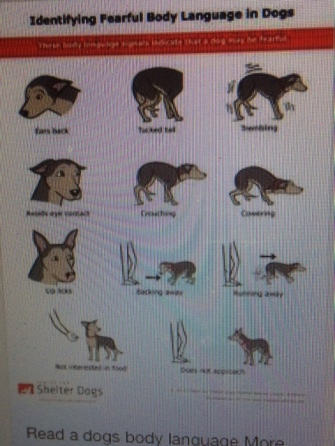
It is important to be able to read their body language and not force them to do any exercise when they don’t want to, they could collapse, you would be causing them a lot of pain and cause their agonising death that would be a far more serious Animal Welfare breach.
Please refer to our Animal Welfare Draft and please declare the entire animal kingdom including all aquatic life and bird life to have equal rights to humans with hefty fines, criminal convictions and prison that includes the Government and any Tribunal and court who refuse to stop and convict the Government’s violence.
It isn’t safe walking dogs in the streets or in unleashed areas. As the video will show you, it isn’t safe for dogs on their own property either that is a more serious animal welfare concern that you need to worry about rather than wanting to fine people for not exercising dogs.
Dogs get far more exercise on their own properties where they are unleashed and can race around, jump around where they are much safer from dog attacks, compared to walking leashed dogs in the urban residential streets.
Newly introduced legislation to kill dangerous dogs abolished.
Dogs protecting their own properties when anyone trespasses are not dangerous & are not doing anything wrong when they defend their own property and owners and should not be killed.
The dogs aren’t dangerous, their owners are who deliberately set their dogs onto other people’s pets on their own properties, let them off their leads in public places that aren’t unleashed areas etc need to be dealt with.
Even in unleashed areas, dog walkers need to remain vigilant to immediately recall their dogs when wildlife, etc. are in the area to quickly replace the leash back onto the dog to keep the dog under tight control.
The dogs belonging to reoffending dog owners need to have their dogs removed and given to loving caring responsible suitable dog owner homes.
Dogs can be retrained, reoffending dog owners can’t, they simply don’t care.
I can assist in dog walking training and education etc.
Experienced Independents who aren’t Government funded need to be named as Stakeholders, placed on ethics committees, animal welfare committees etc to replace the current named Stakeholders, the RSPCA, Vets, DAS etc. and to be invited to all of the meetings for the welfare of all animals.
All of these Government Departments named to have authority need to be instructed by experienced Independents on Kangaroos etc who aren’t Government funded and who aren’t driven by money, greed, light rail, Real Estate, farmers, and hunters.
A reminder that this is the Animal Welfare Act, and not a people convenience Act.
Full term wildlife rehabilitation for sick, injured, orphaned Eastern Grey Kangaroos and all other native wildlife.
I can assist in these areas as well.
WILDLIFE CARERS GROUP FINAL AMENDED SUBMISSION DRAFT ANIMAL WELFARE AND MANAGEMENT STRATEGY 2017-2022
The mass killing and infertility program is unlawfully interfering with, and genetically altering the Kangaroos natural development, weakening the species and driving them to extinction.
In 2018 the Government violently and unnecessarily killed 3,253 Eastern Grey Kangaroos (EGK’s) continuing to commit mass killing based on scientific fraud as they introduce sheep, cattle, goats into the areas where they have killed EGK’s.
It is strongly recommended to immediately reinstate Eastern Grey Kangaroos onto the critically endangered list before they are driven to extinction, and to immediately stop all the killing and the infertility program, none of which that are for Environmental and conservation reasons, that are instead for real estate.
This is the Bush Capital, it is strongly recommended that we maintain the Bush Capital and all native flora and fauna.
It is strongly recommended that the ACT Mammal Emblem be changed to the Eastern Grey Kangaroos, to make up for all of the persecution, defamation and killings based on Scientific Fraud.
With the Animal Welfare Management Strategy recognising animals as being ‘sentient beings’, it is strongly recommended that the 2017-2022 Strategy is NOT in compliance with:
1. the violent Nature Conservation Act 2014, removing all ag gag type sections of the Act.
2. the violent Eastern Grey Kangaroos Draft Controlled Native Species Management Plan that is persecuting and driving the native Eastern Grey Kangaroos to extinction and endangering the public safety, shooting any time and day: https://wildlifecarersgroup.wordpress.com/2017/03/19/eastern-grey-kangaroos-draft-controlled-native-species-management-plan-closes-24317/;
(1. Kangaroos do not overpopulate. Their populations grow until they are in equilibrium with their environment and then stabilise (1, 2.) – an Eastern Grey Kangaroo doe only raises its first joey to the pouch-emergent stage by 3.5 years of age, and finishes breeding at around 12 years of age, she is only likely to produce 8 young in her lifetime.
75% of joeys are likely to die, this leaves only 2 young to survive to adulthood. If the male female sex ratio is parity, only one surviving joey will be a doe, and on average the original female will only effectively replace herself once in her lifetime – parity means that if a doe first conceives at 3 years of age, and has its first young to independence by 4.5 years of age (this assumes success in rearing, and ignores the very high reported juvenile mortality rates), 50% of the time it takes a minimum of 4.5 years for a doe to replace itself with a female offspring. If the doe has a male joey, it will be another 12 months before there is another 50/50 chance she will replace herself with another female. Pouch young sex ratios from Hacker et al (2004), being roughly parity (which was also concluded by Coulson, Kirkpatrick, Poole and Pople / Grigg, however Dawson (1995) identifies that both Eastern and Western Grey Kangaroos seem to experience higher mortality in the males, with only 5% surviving to full maturity (c. 60kg) in the wild.
2. When food is scarce kangaroos stop breeding and move on to greener pastures (3).
3. As admitted in the KMP itself (p12), kangaroos are a keystone species. This means that, at natural densities (which vary with climatic and seasonal variations), they are critical to maintaining all the other native plants and animals which share their habitat. Killing kangaroos is not protecting threatened species. It is further endangering them.
4. No base-line studies have ever been conducted in the ACT to determine how many kangaroos are needed to maintain healthy populations of other native species.
The kangaroo slaughter is conducted at a time of year when, according to the KMP itself (p10-11), almost every mature female kangaroo has both a pouch young and a young at foot in her care. It is conducted under a code of practice which exists for the purpose of permitting acts of cruelty that would otherwise be prohibited by law (5).
References:
Arnold, GW, Grassia A, Steven DE & Weeldenburg JR 1991 Population ecology of western grey kangaroos in a remnant of wandoo woodland at Bakers Hill in southern Western Australia, in Wildlife Research 18 (5): 561-575
Coulson G, Alviano P, Ramp D, Way S 1999 The kangaroos of Yan Yean; history of a problem population in Proceedings of the Royal Society of Victoria 111(1): 121-130.
Burnie, David, Don E. Wilson, 2001, in Animal, pp. 99–101.
Peter B. Banks, Alan E. Newsome and Chris R. Dickman, 2000, Predation by red foxes limits recruitment in populations of eastern grey kangaroos, in Austral Ecology, 25(3) p283
ACT Animal Welfare Act, 1992, Section 20)
3. the violent Code of Practice, https://wildlifecarersgroup.wordpress.com/2013/10/30/autopsy-on-joey-tortured-to-death-by-authorised-tams-government-killing-4612/ TAMS is now TCCS.

4. the Ethics Committee that allows violence and suffering
5. the Kangaroo Management Plan
6. the ACT Kangaroo Management Plan (ACT Government 2010) and subsidiary policy instruments
7. Draft ACT Pest Animal Management Strategy 2011-2021:
8. Draft ACT Native Grasslands Conservation Strategy: https://wildlifecarersgroup.wordpress.com/2017/05/08/wildlife-carers-group-submission-draft-act-native-grasslands-conservation-strategy-closes-12-may-2017/
9. the ACT Nature Conservation Strategy 2013-23 (ACT Government 2013a) and
10. the 2005 Lowland Grassland Conservation Strategy that are all based on fraudulent reports on the Eastern Grey Kangaroos, etc:
finding the Government and their agencies to be in breach of the Animal Welfare and Management Strategy by enforcing heavy fines, criminal convictions, prison sentence to any offenders, including the Government and their agencies.
FULL TERM WILDLIFE REHABILITATION FOR SICK, INJURED ORPHANED NATIVE EASTERN GREY KANGAROOS AND ALL OTHER NATIVE WILDLIFE.
1080 POISON TO BE BANNED
It is strongly recommended to ban the use of 1080 poison that causes a violent death and targets non targeted native wildlife, endangered species, domestic pets, etc. and children.
‘…There’s a lot of interference from non-targets taking baits, things like varanids [goannas], ravens, kangaroos, ants, and feral cats,” Dr Kreplins said….’. Click on this link for the full Report: http://www.abc.net.au/news/rural/2017-03-30/lizards-eating-1080-baits-meant-for-wa-wild-dogs/8398520
The cost of the killing is huge and has a negative impact on society and native wildlife.
The mass killing and infertility program is interfering with and genetically altering the Kangaroos preventing them to develop naturally, weakening the species and driving them to extinction.
Our proposed Kangaroo Park and Wildlife Sanctuary has a positive impact on society, is educational, and would be a multibillion dollar revenue raising program from the tourist industry that the ACT has been deprived of since 2008 by the Government and their agencies.
The Government and their agencies responsible for misconduct, violent killing, genetically altering EGK’s, committing crimes of Scientific Fraud heavily fined, criminally convicted, imprisonment.
It is strongly recommended that the Government and their agencies responsible for all of the above pay back all of the taxpayers money abused and spent on killing and the infertility program etc and use that money to establish our MEMORIAL KANGAROO PARK AND WILDLIFE SANCTUARY.
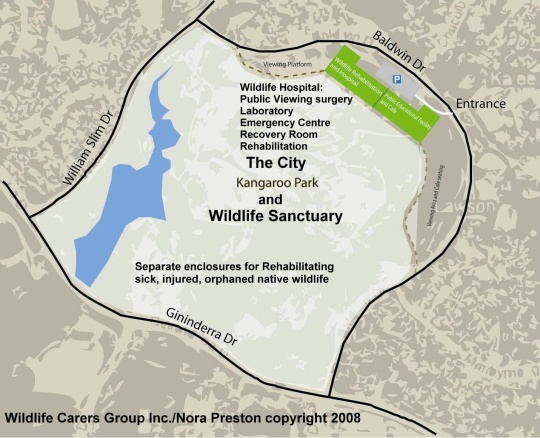
Wildlife Carers Group Map of Memorial Kangaroo Park and Wildlife Sanctuary
Click on this link to read the completed Wildlife Carers Group Submission DRAFT ANIMAL WELFARE AND MANAGEMENT STRATEGY: https://wildlifecarersgroup.wordpress.com/2017/05/15/submission-amended-draft-animal-welfare-and-management-strategy-2017-2022-closes-wednesday-24-may-2017/
It is strongly recommended to publish all of the submissions.
CORRESPONDENCE BETWEEN CONSERVATOR OF FLORA AND FAUNA AND WILDLIFE CARERS GROUP
We are still awaiting a response to my response to the Conservator of Flora and Fauna on the Eastern Grey Kangaroos Controlled Native Species Management Plan.
The unsigned correspondence from the Conservator of Flora and Fauna and my response are below all of this information and the ‘link to this Report’.
‘Earless Dragon scarcity previously coincided with kangaroo scarcity in ACT’ 17/5/17
Out of 41 Submissions that were received, 31 Submissions opposed the Eastern Grey Kangaroos Draft Controlled Native Species Management Plan, only 10 Submissions supported this Plan.
The majority opposed this Plan, therefore It is strongly recommended not to go ahead with this Plan and to immediately abolish it.
It is strongly recommended to immediately publish all of the submissions.
Unfortunately there are quite a few mistakes in this Canberra Times article and link below, probably more typo type mistakes leaving out the complete words etc.
Over $600,000 spent on contraception: https://www.canberratimes.com.au/national/act/spend-on-kangaroo-contraceptive-unlikely-to-end-culling-in-canberra-20170511-gw2kl7.html
More than 2,600 Kangaroos to be violently slaughtered in 2017 based on fraudulent flawed Acts, Plans. Strategies at The 12 sites to be closed for the conservation cull are Mulligans Flat Nature Reserve, Goorooyarroo Nature Reserve, Mount Majura Nature Reserve and adjacent territory land, Kama Nature Reserve, Mount Painter Nature Reserve and adjacent territory land, The Pinnacle Nature Reserve and adjacent unleased land, Mount Mugga Mugga Nature Reserve, Isaacs Ridge Nature Reserves, …Callum Brae Nature Reserve, East Jerrabomberra Grasslands, West Jerrabomberra Nature Reserve, and Googong Foreshores.
These violent killings are not culls, and are not for Conservation purposes with our Kangaroos being driven to extinction, weakening the species genetically altering our Kangaroos committed by over killing and the infertility program. This is criminal.
Kangaroos maintain a healthy well balanced eco system.
To read the correspondence between the Conservator of Flora and Fauna and Wildlife Carers Group, click on this Link to read this full Report: https://wildlifecarersgroup.wordpress.com/2017/05/15/responses-to-draft-eastern-grey-kangaroos-controlled-native-species-plan-submission-from-conservator-of-flora-and-fauna-and-my-response-shown-first-15517/
LADY NORA PRESTON – Independent Volunteer, began rehabilitating wildlife in the early 1980’s, began giving animal welfare advice in the 1970’s
Founding President – since 2004
Honorary Member – since 2004
Animal Welfare Inspector – since 2004
WILDLIFE CARERS GROUP – (WCG) founded in 2004
PO Box 3509
WESTON CREEK ACT 2611
Mobile: 0406 056 099
Email: wildlife_carers_group@yahoo.com.au
WILDLIFE CARERS GROUP is a VOLUNTARY INDEPENDENT NON PROFIT COMMUNITY BASED GROUP with no Government funding – Independent – adj. 1. Not governed by a foreign power; self-governing. 2. Free from the control of another or others; self-reliant.
Website: http://wcg.awardspace.com (we’ve been unable to update this website, as hard as a few of us have tried, updates on Facebook and WordPress, some on Twitter)
We are also on Facebook, https://www.facebook.com/nora.preston.16 with photos included on the site, and please become a friend.
You can now follow us and join us on Twitter http://twitter.com/wildlifecarersg/
http://www.myspace.com/wcginc (not updated)
Check out http://www.myspace.com/wcginc and become a friend.
Support WCG. WCG is an independent, non profit, non government community based charity providing animal/wildlife care, rescue/rehabilitation and is also an animal/wildlife welfare group, providing protection for our wildlife/animals, run solely by volunteers, with no government funding, saving taxpayers money
Aims and Objectives: To promote the general welfare and continued survival of native fauna and flora as an essential element of the environment, and specifically to undertake the specialised care necessary for the rehabilitation of orphaned, sick and injured native birds and other animals, to promote public awareness of the need to conserve existing wildlife species, and an understanding of their particular habitat and feeding requirements.
Disclaimer: WCG and the author do not assume or accept any responsibility and shall not be liable for the accuracy or appropriate application of the information contained in this letter/email/blog/report/article.
WILDLIFE CARERS GROUP REPORT ON 2017 VIOLENT AND UNNECESSARY KANGAROO MASSACRE IGNORING ALL THE EXPERTS TO STOP – 17/07/17
Procoptodon goliah: Kingdom: Animalia; Phylum: Chordata; Class: Mammalia; Infraclass: Marsupiala; Order: Diprotodontia; Family: Macropodidae; Subfamily: Sthenurinae; Genus: †Procoptodon – Owen, 1873. Procoptodon goliah was mainly known for living in semiarid areas of South Australia and New South Wales. These environments were harsh, characterized by vast areas of treeless, wind-blown sand dunes. However, around Lake Menindee, in western New South Wales, had a cooler, wetter climate at the time Procoptodon existed.
The surrounding area was a mosaic of sclerophyll forest, woodland, savannah and plains, but sand dunes would have also formed along the edges of the Menindee.

3. As admitted in the KMP itself (p12), kangaroos are a keystone species. This means that, at natural densities (which vary with climatic and seasonal variations), they are critical to maintaining all the other native plants and animals which share their habitat. Killing kangaroos is not protecting threatened species. It is further endangering them.
4. No base-line studies have ever been conducted in the ACT to determine how many kangaroos are needed to maintain healthy populations of other native species.
Arnold, GW, Grassia A, Steven DE & Weeldenburg JR 1991 Population ecology of western grey kangaroos in a remnant of wandoo woodland at Bakers Hill in southern Western Australia, in Wildlife Research 18 (5): 561-575
Coulson G, Alviano P, Ramp D, Way S 1999 The kangaroos of Yan Yean; history of a problem population in Proceedings of the Royal Society of Victoria 111(1): 121-130.
Burnie, David, Don E. Wilson, 2001, in Animal, pp. 99–101.
Peter B. Banks, Alan E. Newsome and Chris R. Dickman, 2000, Predation by red foxes limits recruitment in populations of eastern grey kangaroos, in Austral Ecology, 25(3) p283
ACT Animal Welfare Act, 1992, Section 20)
The Eastern Grey Kangaroo (Macropus giganteus) was declared a controlled native species from 8 February 2017 under the Nature Conservation Act 2014. On 7 February 2017, the Conservator of Flora and Fauna (the Conservator) released the Eastern Grey Kangaroo – Draft Controlled Native Species Management Plan (Draft Plan) for six weeks until 24 March 2017.
During consultation the Conservator received 47 submissions on the Draft Plan. These were from individuals (29), community organisations (17), and a government agency (1). Of these: • 10 submissions supported the Draft Plan • 31 submissions opposed the Draft Plan • 6 submissions did not specifically express ‘support/not support’ but dealt with particular aspects of the Draft Plan only.
Link to 1st correspondence between WILDLIFE CARERS GROUP and the Conservator of Flora and Fauna:
2nd Correspondence between WILDLIFE CARERS GROUP and the Conservator of Flora and Fauna with WILDLIFE CARERS GROUP 2nd response showing first:
In 2011-2012 the Directorate of Environment and Sustainable Development published their records that $244,750 was spent on the Canberra violent Kangaroo killing.
2. When food is scarce kangaroos stop breeding and move on to greener pastures (3).
3. As admitted in the KMP itself (p12), kangaroos are a keystone species. This means that, at natural densities (which vary with climatic and seasonal variations), they are critical to maintaining all the other native plants and animals which share their habitat. Killing kangaroos is not protecting threatened species. It is further endangering them.
4. No base-line studies have ever been conducted in the ACT to determine how many kangaroos are needed to maintain healthy populations of other native species.
Arnold, GW, Grassia A, Steven DE & Weeldenburg JR 1991 Population ecology of western grey kangaroos in a remnant of wandoo woodland at Bakers Hill in southern Western Australia, in Wildlife Research 18 (5): 561-575
Coulson G, Alviano P, Ramp D, Way S 1999 The kangaroos of Yan Yean; history of a problem population in Proceedings of the Royal Society of Victoria 111(1): 121-130.
Burnie, David, Don E. Wilson, 2001, in Animal, pp. 99–101.
Peter B. Banks, Alan E. Newsome and Chris R. Dickman, 2000, Predation by red foxes limits recruitment in populations of eastern grey kangaroos, in Austral Ecology, 25(3) p283
ACT Animal Welfare Act, 1992, Section 20)
|
Wildlife Carers Group Map of Memorial Kangaroo Park and Wildlife Sanctuary
|
|
To: “wildlife_carers_group@yahoo.com.au” <wildlife_carers_group@yahoo.com.au>
Sent: Monday, 19 June 2017, 10:58
Subject: Response to your submission on the Eastern Grey Kangaroo: Controlled Native Species Management Plan [SEC=UNCLASSIFIED]
Government Services, Communications & Legislation Services | Environment, Planning and Sustainable Development Directorate | ACT Government
Government Services, Communications & Legislation Services | Environment, Planning and Sustainable Development Directorate | ACT Government
This email, and any attachments, may be confidential and also privileged. If you are not the intended recipient, please notify the sender and delete all copies of this transmission along with any attachments immediately. You should not copy or use it for any purpose, nor disclose its contents to any other person.”
———————————————————————–

The mass killing and infertility program is interfering with, and genetically altering the Kangaroos natural development, weakening the species and driving them to extinction.
‘The kangaroo massacre destroys the process of natural selection. The repeated targeting of the ‘alpha’ males, the largest and fittest animals (who provide the industry with the big skins they want),’ [and that the Government also target in their violent unnecessary killing based on fiction] ‘means younger, smaller animals are left to breed, weakening the gene pool. “This has the potential to cause the extinction of a number of species”. (Dr Ian Gunn, Animal Gene Storage Resource Centre of Australia.) Australia has the worst wildlife record in the world – six species of kangaroos extinct, four more extinct on the Australian mainland, 17 species endangered or vulnerable.’
Thank you for all of your help.
2. http://www.change.org/en-AU/petitions/chief-tams-ministers-stop-the-unlawful-violent-killing-of-protected-native-kangaroos
7,340 SIGNATURES
3. http://www.communityrun.org/petitions/stop-the-unlawful-violent-killing-of-protected-native-kangaroos
1,171 SIGNATURES
Read more: https://wildlifecarersgroup.wordpress.com/2015/04/20/wildlife-carers-group-news-21415-stop-the-violent-roo-kill-invite-to-book-launch-animal-justice-party-more/, https://wildlifecarersgroup.wordpress.com/2013/10/, https://wildlifecarersgroup.wordpress.com/2013/04/01/wildlife-carers-group-news-kangaroos-hit-and-run-tortoise-1413/
More than 2,600 Kangaroos to be violently slaughtered from 17 May 2017 based on fraudulent flawed Acts, Plans. Strategies, etc. at the 12 sites to be closed for the conservation cull are Mulligans Flat Nature Reserve, Goorooyarroo Nature Reserve, Mount Majura Nature Reserve and adjacent territory land, Kama Nature Reserve, Mount Painter Nature Reserve and adjacent territory land, The Pinnacle Nature Reserve and adjacent unleased land, Mount Mugga Mugga Nature Reserve, Isaacs Ridge Nature Reserves, …Callum Brae Nature Reserve, East Jerrabomberra Grasslands, West Jerrabomberra Nature Reserve, and Googong Foreshores.
2. When food is scarce (which is rare in this region) kangaroos simply stop breeding (3) and move on until they find greener pastures.
3. As admitted in the KMP itself (p12), kangaroos are a keystone species. This means that, at natural densities (which vary with climatic and seasonal variations), they are critical to maintaining all the other native plants and animals which share their habitat. Killing kangaroos is not protecting threatened species. It is further endangering them.
4. No base-line studies have ever been conducted in the ACT to determine how many kangaroos are needed to maintain healthy populations of other native species.
5. Female kangaroos do not mature (unless forced to it by extreme population depletion) until they are two years old, and give birth only once a year. There is also a high level (50-100%) of infant mortality. Consequently, the fastest a kangaroo population can grow (until it stabilises) is about 10% per year4. Even though the Government continues to kill kangaroos at a rate of 40% each year.
Arnold, GW, Grassia A, Steven DE & Weeldenburg JR 1991 Population ecology of western grey kangaroos in a remnant of wandoo woodland at Bakers Hill in southern Western Australia, in Wildlife Research 18 (5): 561-575
Coulson G, Alviano P, Ramp D, Way S 1999 The kangaroos of Yan Yean; history of a problem population in Proceedings of the Royal Society of Victoria 111(1): 121-130.
Burnie, David, Don E. Wilson, 2001, in Animal, pp. 99–101.
Peter B. Banks, Alan E. Newsome and Chris R. Dickman, 2000, Predation by red foxes limits recruitment in populations of eastern grey kangaroos, in Austral Ecology, 25(3) p283
ACT Animal Welfare Act, 1992, Section 20
WISHING YOU A VERY SAFE AND HAPPY YEAR FOR 2017.
WILDLIFE CARERS GROUP SUBMISSION ANIMAL WELFARE LEGISLATION AMENDMENT BILL 2019:
The Animal Welfare and Management Strategy 2017-2022 states:‘1. INTRODUCTIONCanberra’s setting as the Bush Capital means people living in and visiting the ACT have regular interaction with animals; whether it’s observing the variety of birdlife in our neighbourhoods, the threatened species in one of our many nature reserves, or kangaroos grazing in our open spaces.The Territory’s significant network of open space and community facilities mean that Canberra is a great place to keep a companion animal.As well as the intrinsic and companionship values that animals hold, they are sentient beings that have the ability to perceive and feel a range of emotions including pain, fear and joy. Animals cannot advocate for themselves and so it is our responsibility to do this on their behalf.For these reasons, animal welfare is important. Everyone has a role in ensuring animals receive appropriate care and are treated humanely. This includes being informed about issues affecting animals, practising responsible pet ownership and avoiding impacts to native animals.The Animal Welfare and Management Strategy 2017 – 2022 (the strategy) has been developed to ensure the ACT Government delivers a consistent and consolidated approach to promoting improved outcomes for animal welfare and management. In the absence of a targeted strategy, animal welfare and management practices are less likely to evolve to meet the changing expectations of the ACT community. The strategy will also be used to guide future government decision making and outlines all actions in a single document that can be easily accessed by the community.’Note that the 3rd paragraph of the Strategy under 1.INTRODUCTION, counting from the 1st paragraph in bold, declares all animals as ‘…sentient beings that have the ability to perceive and feel a range of emotions including pain, fear and joy. Animals can not advocate for themselves and so it is our responsibility to do this on their behalf…Domestic Animals


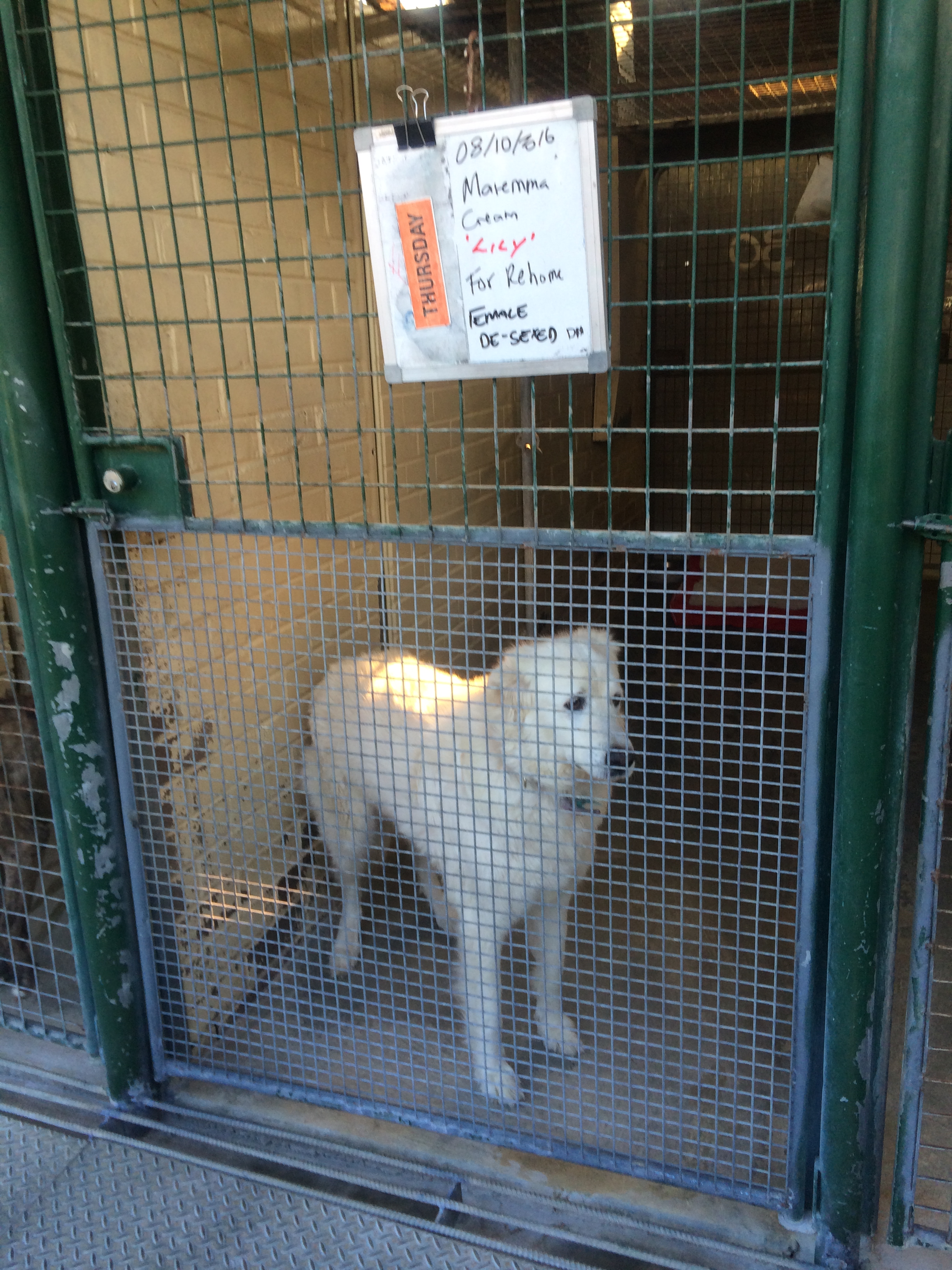
Acts of animal cruelty on a 7 year old dog raised in Canberra when she had a good home to go to in Canberra if her owners didn’t want her back.
As if DAS’s actions not to release Lily from DAS on 11/10/16 wasn’t bad enough, DAS/TAMS Directorate and staff involved in sending this poor old dog to another rescue group rather than rehoming her immediately they got the opportunity on 11/10/16 is already an animal welfare matter/crime, it was further more inhumane of DAS to have this poor old dog transported to Pipers Flat that is a 5 to 6 hours drive from Canberra past Bathurst and to rip her out of her own environment that she has lived in for her 7 years of her life.
As of 9/11/16, Lily still was not and couldn’t be assessed because she was too unsettled and miserable at the Maremma Rescue Group.
Recommendations: Under the Animal Welfare Act, I will further ask to make it mandatory that the Maremma Rescue Group and any other Rescue Groups or people taking dogs from the pound speak first with the owners of these dogs that are at the pound/DAS, to first obtain the history of the dog and speak with the owners to confirm that the owners know where the dog is,and to consider the dogs age, before any dog is ripped out of their own state, etc. and to further find out whether someone from their own state has offered to take the dog and place the dog into a good home. The Maremma Rescue Group should be the last resort. We can not keep handing the same dogs to other rescue groups over exploitation, to auction the dog off to the highest bidder.
If the owners want their dogs back, then they should get their dogs back if they haven’t abused the dogs, or aren’t deliberately let out to roam by the owners, or the owners don’t walk the dogs unleashed to place their own dogs and other pets and people in danger.
If the owners prove themselves to be loving, responsible and caring pet owners, then the dog owners should get their dogs back.
We went back to DAS on Monday 7/11/16 to check on Lily and to see Franklin to assess him, however they were both gone.
Lily was not going onto a property where she may be a risk to farm animals and stock. I don’t have any stock, she is too old for all of that anyway, and too old to be jumping fences, therefore all of their reasons are null and void for sending an old dog away from her homeland and refusing to sell her to me on 11/10/16. My property is secure anyway. I went back to DAS on Thursday 13/10/16 when she was still to be rehomed, please see attached photo I took of Lily. She was at the pound since 8/10/16. I went back again on Tuesday 18/10/16 with someone else when the rehomed sign was changed to ‘not for sale’ when I saw a real change in Lily due to being abused.
Recommendations: The temperament testing must be banned that is used by the RSPCA and dog/animal pounds, rescue groups, they are inhumane.
Under Animal Welfare, legal action needs to be taken against DAS over this case.
Franklin is apparently a farm working dog and will not be with Lily, as falsely portrayed by DAS and The Chronicle in their 1/11/16 edition, ‘Franklin has finally found a new home’, p.9 by Megan Doherty, however, since we didn’t see Franklin, we can’t confirm that he is a working farm dog.
By reading The Chronicle story on him, he is still a suburbia dog and not a farm working dog either. His age is not known that should be taken into consideration, he may be an old dog as well, in which case, it would be wrong to change his life style that he has grown up in.
Lily is a companion animal to live where she has access to go in and out of a house.
The history, the age etc must be checked before allowing any dog be ripped out of their environment and state.
I phoned Maremma Rescue Group twice on Wednesday 9/11/16 and spoke with the husband the first time for a lengthy time and then spoke with the wife for a lengthy time the 2nd time after he told me to ring back after dark to speak with his wife.
There are grounds to investigate Lily. The wife did not bother checking the history on Lily.
Lily’s history needs to be investigated on how the pound got her and why she wasn’t given back to her owner.
Franklin was not her mate.
The wife was told by DAS that the owner dumped Lily at the pound, I was told she was picked up as a stray and that it was the first time she was picked up.
The owner needs to be found and contacted to find out the truth. I would like to be contacted with this information, or let me know who the owner is so that I can contact the owner.
Lily could’ve been let out by someone with the owners not knowing, maybe overseas, or not being able to afford to pay the pound, there could be a lot of other reasons, maybe the owners still don’t know what has happened to their beloved dog.
Lily was born in 2009 which makes her an old dog at 7 years old, DAS website showed that she was 2 years old.
The wife asked me why I didn’t buy her from the pound, I told her I tried. I already assessed Lily without touching her, I knew she was not suitable to be dumped in a paddock, (which is what DAS wanted to do, and then a breeding program when she is desexed and can’t breed) that she was a pet living in a house, Lily is a Canberra City dog, not a working farm dog, she agreed with me. The wife confirmed Lily is desexed and microchipped.
The history of this dog needs to be investigated.
The Chronicle ran the article in their 1/11/16 edition, the husband told me they picked the dogs up either early November orlate October, his wife didn’t answer my question.
This poor old dog’s welfare has never been top priority by DAS and Directorate and TAMS.
This is a welfare case with Lily against DAS.
The history run down with my experience and how the dog showed abuse by DAS staff towards her through her body language with each visit by me is as follows:
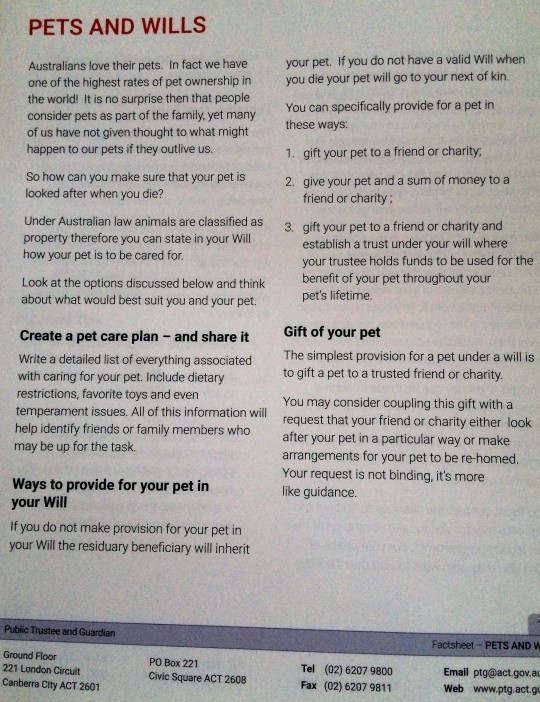
Pets and Wills 26/10/16 PTG Forum
https://districtbulletin.com.au/isaacs-ridge-act-delivers-bike-trails-and-death-in-the-afternoon/
(1. Kangaroos do not overpopulate. Their populations grow until they are in equilibrium with their environment and then stabilise (1, 2.) – an Eastern Grey Kangaroo doe only raises its first joey to the pouch-emergent stage by 3.5 years of age, and finishes breeding at around 12 years of age, she is only likely to produce 8 young in her lifetime.
75% of joeys are likely to die, this leaves only 2 young to survive to adulthood. If the male female sex ratio is parity, only one surviving joey will be a doe, and on average the original female will only effectively replace herself once in her lifetime – parity means that if a doe first conceives at 3 years of age, and has its first young to independence by 4.5 years of age (this assumes success in rearing, and ignores the very high reported juvenile mortality rates), 50% of the time it takes a minimum of 4.5 years for a doe to replace itself with a female offspring. If the doe has a male joey, it will be another 12 months before there is another 50/50 chance she will replace herself with another female. Pouch young sex ratios from Hacker et al (2004), being roughly parity (which was also concluded by Coulson, Kirkpatrick, Poole and Pople / Grigg, however Dawson (1995) identifies that both Eastern and Western Grey Kangaroos seem to experience higher mortality in the males, with only 5% surviving to full maturity (c. 60kg) in the wild.
2. When food is scarce kangaroos stop breeding and move on to greener pastures (3).
3. As admitted in the KMP itself (p12), kangaroos are a keystone species. This means that, at natural densities (which vary with climatic and seasonal variations), they are critical to maintaining all the other native plants and animals which share their habitat. Killing kangaroos is not protecting threatened species. It is further endangering them.
4. No base-line studies have ever been conducted in the ACT to determine how many kangaroos are needed to maintain healthy populations of other native species.
Arnold, GW, Grassia A, Steven DE & Weeldenburg JR 1991 Population ecology of western grey kangaroos in a remnant of wandoo woodland at Bakers Hill in southern Western Australia, in Wildlife Research 18 (5): 561-575
Coulson G, Alviano P, Ramp D, Way S 1999 The kangaroos of Yan Yean; history of a problem population in Proceedings of the Royal Society of Victoria 111(1): 121-130.
Burnie, David, Don E. Wilson, 2001, in Animal, pp. 99–101.
Peter B. Banks, Alan E. Newsome and Chris R. Dickman, 2000, Predation by red foxes limits recruitment in populations of eastern grey kangaroos, in Austral Ecology, 25(3) p283
ACT Animal Welfare Act, 1992, Section 20)
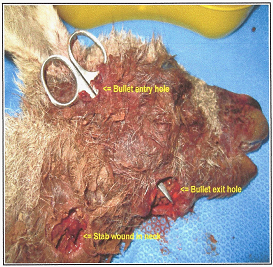
The mass killing and infertility program is interfering with, and genetically altering the Kangaroos natural development, weakening the species and driving them to extinction.
‘The kangaroo massacre destroys the process of natural selection. The repeated targeting of the ‘alpha’ males, the largest and fittest animals (who provide the industry with the big skins they want),’ [and that the Government also target in their violent unnecessary killing based on fiction] ‘means younger, smaller animals are left to breed, weakening the gene pool. “This has the potential to cause the extinction of a number of species”. (Dr Ian Gunn, Animal Gene Storage Resource Centre of Australia.) Australia has the worst wildlife record in the world – six species of kangaroos extinct, four more extinct on the Australian mainland, 17 species endangered or vulnerable.’
It is strongly recommended that under this Animal Welfare Management Strategy that recognises animals as being sentient beings, that it is not in compliance with:1. the violent Nature Conservation Act 2014 removing all ag-gag type sections from the Act.2. the violent Eastern Grey Kangaroos Draft Controlled Native Species Management Plan that persecutes and drives the native Eastern Grey Kangaroos to extinction and endangers public safety shooting any time and day: https://wildlifecarersgroup.wordpress.com/2017/03/19/eastern-grey-kangaroos-draft-controlled-native-species-management-plan-closes-24317/; https://wildlifecarersgroup.wordpress.com/2017/05/15/responses-to-draft-eastern-grey-kangaroos-controlled-native-species-plan-submission-from-conservator-of-flora-and-fauna-and-my-response-shown-first-15517/;(1. Kangaroos do not overpopulate. Their populations grow until they are in equilibrium with their environment and then stabilise (1, 2.) – an Eastern Grey Kangaroo doe only raises its first joey to the pouch-emergent stage by 3.5 years of age, and finishes breeding at around 12 years of age, she is only likely to produce 8 young in her lifetime.
75% of joeys are likely to die, this leaves only 2 young to survive to adulthood. If the male female sex ratio is parity, only one surviving joey will be a doe, and on average the original female will only effectively replace herself once in her lifetime – parity means that if a doe first conceives at 3 years of age, and has its first young to independence by 4.5 years of age (this assumes success in rearing, and ignores the very high reported juvenile mortality rates), 50% of the time it takes a minimum of 4.5 years for a doe to replace itself with a female offspring. If the doe has a male joey, it will be another 12 months before there is another 50/50 chance she will replace herself with another female. Pouch young sex ratios from Hacker et al (2004), being roughly parity (which was also concluded by Coulson, Kirkpatrick, Poole and Pople / Grigg, however Dawson (1995) identifies that both Eastern and Western Grey Kangaroos seem to experience higher mortality in the males, with only 5% surviving to full maturity (c. 60kg) in the wild.
2. When food is scarce kangaroos stop breeding and move on to greener pastures (3).
3. As admitted in the KMP itself (p12), kangaroos are a keystone species. This means that, at natural densities (which vary with climatic and seasonal variations), they are critical to maintaining all the other native plants and animals which share their habitat. Killing kangaroos is not protecting threatened species. It is further endangering them.
4. No base-line studies have ever been conducted in the ACT to determine how many kangaroos are needed to maintain healthy populations of other native species.The kangaroo slaughter is conducted at a time of year when, according to the KMP itself (p10-11), almost every mature female kangaroo has both a pouch young and a young at foot in her care. It is conducted under a code of practice which exists for the purpose of permitting acts of cruelty that would otherwise be prohibited by law (5).References:
Arnold, GW, Grassia A, Steven DE & Weeldenburg JR 1991 Population ecology of western grey kangaroos in a remnant of wandoo woodland at Bakers Hill in southern Western Australia, in Wildlife Research 18 (5): 561-575
Coulson G, Alviano P, Ramp D, Way S 1999 The kangaroos of Yan Yean; history of a problem population in Proceedings of the Royal Society of Victoria 111(1): 121-130.
Burnie, David, Don E. Wilson, 2001, in Animal, pp. 99–101.
Peter B. Banks, Alan E. Newsome and Chris R. Dickman, 2000, Predation by red foxes limits recruitment in populations of eastern grey kangaroos, in Austral Ecology, 25(3) p283
ACT Animal Welfare Act, 1992, Section 20)3. the violent Code of Practice,https://wildlifecarersgroup.wordpress.com/2013/10/30/autopsy-on-joey-tortured-to-death-by-authorised-tams-government-killing-4612/ (TAMS IS NOW TCCS.)4. the Ethics Committee that allows violence and suffering5. the Kangaroo Management Plan6. the ACT Kangaroo Management Plan (ACT Government 2010) and subsidiary policy instruments7. Draft ACT Pest Animal Management Strategy 2011-2021: https://wildlifecarersgroup.wordpress.com/2011/09/27/amendments-darting-currawongs-rspca-draft-act-pest-animal-management-strategy-2011-2021/8. Draft ACT Native Grasslands Conservation Strategy – https://wildlifecarersgroup.wordpress.com/2017/05/08/wildlife-carers-group-submission-draft-act-native-grasslands-conservation-strategy-closes-12-may-2017/; https://wildlifecarersgroup.wordpress.com/2017/05/16/earless-dragon-scarcity-previously-coincided-with-kangaroo-scarcity-in-act-17517/, that is consistent with9. the ACT Nature Conservation Strategy 2013-23 (ACT Government 2013a) and10. the 2005 Lowland Grassland Conservation Strategy that are all based on fraudulent reports on the Eastern Grey Kangaroos, etc. finding the Government and their agencies to be in breach of the Animal Welfare and Management Strategy by enforcing heavy fines, criminal convictions, prison sentence to any offenders, including the Government and their agencies.1080 POISON BANNEDIt is strongly recommended to ban the use of 1080 poison that causes a violent death and targets non targetted native wildlife, endangered species, domestic pets, etc. and children.‘…There’s a lot of interference from non-targets taking baits, things like varanids [goannas], ravens, kangaroos, ants, and feral cats,” Dr Kreplins said….’. Click on this link for the full Report:http://www.abc.net.au/news/rural/2017-03-30/lizards-eating-1080-baits-meant-for-wa-wild-dogs/8398520The cost of the killing of Kangaroos is huge and has a negative impact on society and native wildlife.The mass killing and infertility program is interfering with, and UNLAWFULLY genetically altering the Kangaroos natural development,weakening the species and driving them to extinction.
‘The kangaroo massacre destroys the process of natural selection. The repeated targeting of the ‘alpha’ males, the largest and fittest animals (who provide the industry with the big skins they want),’ [and that the Government also target in their violent unnecessary killing based on fiction] ‘means younger, smaller animals are left to breed, weakening the gene pool. “This has the potential to cause the extinction of a number of species”. (Dr Ian Gunn, Animal Gene Storage Resource Centre of Australia.) Australia has the worst wildlife record in the world – six species of kangaroos extinct, four more extinct on the Australian mainland, 17 species endangered or vulnerable.’
Our proposed Kangaroo Park and Wildlife Sanctuary has a positive impact on society, is educational, and would be a multibillion dollar revenue raising program from the tourist industry that the Government has deprived the ACT of since 2008.Wildlife Carers Group Map of Memorial Kangaroo Park and Wildlife Sanctuary
The infertility program, ‘Kangaroo fertility trial cost released’ in the Chronicle 31/1/17 has cost the taxpayers $600,000, and then another report shows $530,000:
This article in the Sydney Morning Herald reports that the violent infertility program cost $612,000.In 2013 the Annual roo cull cost $182 a head. I’m sure the current cost has more than tripled, crippling the economy not to mention that is weakening and driving protected native Eastern Grey Kangaroos to exinction as the Kangaroo sizes show to be smaller due to the mismangement and shooting of the mobs. http://www.canberratimes.com.au/act-news/annual-roo-cull-costs-182-a-head-20131115-2xmw9.htmlIn 2011-2012 the Directorate of Environment and Sustainable Development published their records that $244,750 was spent on the Canberra violent Kangaroo killing.This figure would’ve more than tripled up to 2017 that is ongoing abuse of taxpayers money and their positions committing professional misconduct on unnecessary violent killing based on fiction.‘Earless Dragon scarcity previously coincided with kangaroo scarcity in ACTDon Fletcher, in “Population Dynamics of Eastern Grey Kangaroos in Temperate Grasslands,” describes how, in the 1940s and 1950s kangaroos actually became rare in the ACT due to competition by European grazing stock. Even when these stock were removed, they remained rare for some time. Salt blocks were put out in the 1960s to attract kangaroos to the Tidbinbilla Fauna Reserve, where in 1963 employees went for three months without seeing one.) [12]Oddly, at the same time as kangaroos were banished from the ACT, the Earless Dragon also became scarce. It couldn’t have been because of too many kangaroos.“The Grassland Earless Dragon was very common in the ACT up to the 1930s but there are now very few left. This is mainly because there are so few areas of its native grassland habitat remaining. There are now only two main populations known in the ACT; and there is one near Cooma in NSW.” Source: The ACT Conservation Council’: https://awpc.org.au/act-roo-killings-who-profits-behind-the-earless-dragon-mask/comment-page-1/Don Fletcher’s same PhD documents also state that they were regularly killing Kangaroos in one fenced off area that caused the Kangaroos to become smaller that shows that the mass killing and infertility program are interfering with and genetically altering the Kangaroos natural development and weakening the species, driving them to extinction. This is criminal.Research has already been undertaken, with one section being fenced off with no Kangaroos. The vegetation in this section died off because there were no Kangaroos in the fenced off section due to no grazing, stimulating the vegetation to regrow.Another section was fenced off with the soft footed Kangaroos grazing in there. The vegetation in this section thrived due to the grazing of the Kangaroos, stimulating the vegetation regrowth.This clearly shows that Friends of Mount Majura – FOMM have their story back the front in the article in the Canberra Times (CT) on Friday 22 March 2013, ‘News’ Section p.7 with the subject heading ‘Majura roos in sights of cullers’ written by John Thistleton and Larissa Nicholson .Kangaroos and the grazing of the Kangaroos is extremely important as the Kangaroos only skim off the highest, tough growth of plants, exposing tender shoots, stimulating vegetation regrowth, saving the grasslands, habitat and the endangered native flora and fauna species that live there.The soft footed Kangaroos cause no environmental damage and maintain a healthy well balanced eco system.The mass killing and infertility program is unlawfully genetically altering the Kangaroos weakening the species and driving them to extinction.Animal Justice Party Kangaroo Report: https://wildlifecarersgroup.wordpress.com/2013/10/30/animal-justice-party-kangaroo-report-22513/Wildlife Carers Group Submission for the Eastern Grey Kangaroos Draft Controlled Native Species Management Plan recommending that it be abolished, and in the Nature Conservation Act 2014 is recommending that the section for the controlled native species be deleted, removing all ag-gag type sections from the Act. The submission also recommends that the no Kangaroo Policy be abolished with a ban on killing and a ban on the infertility program that is interfering with and genetically altering them weakening the species and driving the Eastern Grey Kangaroos (EGK’s) to extinction, changing the EGK’s Status to critically endangered.‘The kangaroo massacre destroys the process of natural selection. The repeated targeting of the ‘alpha’ males, the largest and fittest animals (who provide the industry with the big skins they want),’ [and that the Government also target in their violent unnecessary killing based on fiction] ‘means younger, smaller animals are left to breed, weakening the gene pool. “This has the potential to cause the extinction of a number of species”. (Dr Ian Gunn, Animal Gene Storage Resource Centre of Australia.) Australia has the worst wildlife record in the world – six species of kangaroos extinct, four more extinct on the Australian mainland, 17 species endangered or vulnerable.’
It is strongly recommneded that the EGK’s are placed in the critically endangered category with full protection under the Nature Conservation Act 2014 with all ag-gag sections removed from the Act. The Wildlife Carers Group Draft Controlled Native Species Management Plan also strongly recommends that the sick, injured, orphaned EGK’s be given full term rehabilitation status in Wildlife Rehabilitation Licences that are issued and abolishing the Management Plan. Please click on this link to view Wildlife Carers Group Submission: https://wildlifecarersgroup.wordpress.com/2017/03/19/eastern-grey-kangaroos-draft-controlled-native-species-management-plan-closes-24317/My expertise with Eastern Grey Kangaroos, I went from this as a child:to this:The Animal Defenders Office (ADO) Submission for the Eastern Grey Kangaroos Draft Controlled Native Species Management Plan opposing the Plan. Please click on this link to read ADO’s Submission: https://media.wix.com/ugd/a64856_ebdefa030f0041e28f9cd971ef3090a8.pdfI am a member of ADO.1080 POISON TO BE BANNEDIt is strongly recommended that 1080 poison be banned that causes a violent death and is a danger to the community when children can pick up the baits and eat them. 1080 poison is also eaten by non target endangered animals, pets, etc:http://www.abc.net.au/news/rural/2017-03-30/lizards-eating-1080-baits-meant-for-wa-wild-dogs/8398520THE CODE OF PRACTICE is violent and unacceptable.

‘The kangaroo massacre destroys the process of natural selection. The repeated targeting of the ‘alpha’ males, the largest and fittest animals (who provide the industry with the big skins they want),’ [and that the Government also target in their violent unnecessary killing based on fiction] ‘means younger, smaller animals are left to breed, weakening the gene pool. “This has the potential to cause the extinction of a number of species”. (Dr Ian Gunn, Animal Gene Storage Resource Centre of Australia.) Australia has the worst wildlife record in the world – six species of kangaroos extinct, four more extinct on the Australian mainland, 17 species endangered or vulnerable.’
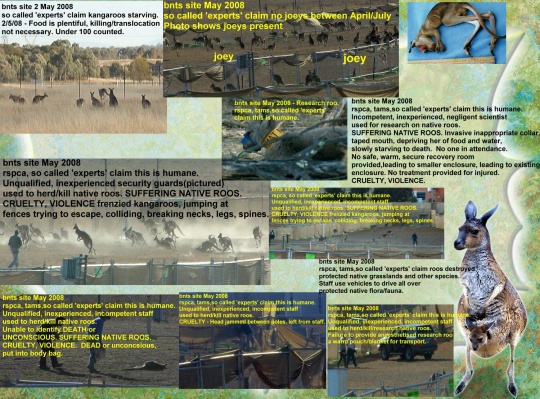


This Brush-tailed Possum Joey was used in live baiting showing the Greyhound Racing Industry in a short film, dragged along the ground, spinning around on the ground while being chased. This Brush-tailed Possum Joey’s tail can be seen stick in up in the air and then flat on the ground while being dragged and rolling around along the ground, while being chased by the Greyhound, cast, and film crew.
It is strongly recommended that all racing, recreational and sport activities using animals be banned to prevent the exploitation of animals and the violent treatment that they suffer.If they aren’t fast enough, if they are injured, they are treated as liabilities, they are either inhumanely treated, neglected and/or inhumanely destroyed.
ANIMALS USED ON SETS FOR FILMING, etc
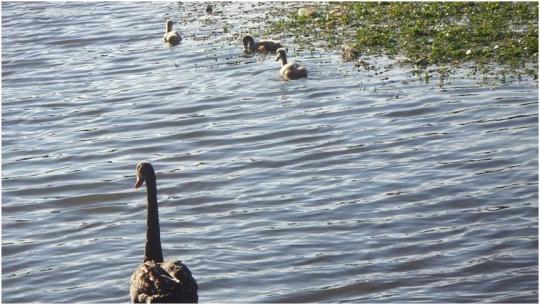


The mass killing and infertility program is interfering with and genetically altering the Kangaroos preventing the species natural development, weakening the species and driving them to extinction. The same applies to all other native wildlife that the Government is interfering with.
‘The kangaroo massacre destroys the process of natural selection. The repeated targeting of the ‘alpha’ males, the largest and fittest animals (who provide the industry with the big skins they want),’ [and that the Government also target in their violent unnecessary killing based on fiction] ‘means younger, smaller animals are left to breed, weakening the gene pool. “This has the potential to cause the extinction of a number of species”. (Dr Ian Gunn, Animal Gene Storage Resource Centre of Australia.) Australia has the worst wildlife record in the world – six species of kangaroos extinct, four more extinct on the Australian mainland, 17 species endangered or vulnerable.’
WISHING YOU A VERY SAFE AND HAPPY YEAR FOR 2017.
We await a response to my response.
The unsigned correspondence from the Conservator of Flora and Fauna and my response are below all of this information and the ‘link to this Report’.
Out of 41 Submissions that were received, 31 Submissions opposed this Eastern Grey Kangaroos Draft Controlled Native Species Management Plan, only 10 Submissions supported this Plan.
A good enough reason not to go ahead with this Plan and to abolish it.
Unfortunately there are quite a few mistakes in this Canberra Times article and link below, probably more typo type mistakes leaving out the complete words etc.
More than 2,600 Kangaroos to be violently slaughtered in 2017 based on fraudulent flawed Acts, Plans. Strategies at The 12 sites to be closed for the conservation cull are Mulligans Flat Nature Reserve, Goorooyarroo Nature Reserve, Mount Majura Nature Reserve and adjacent territory land, Kama Nature Reserve, Mount Painter Nature Reserve and adjacent territory land, The Pinnacle Nature Reserve and adjacent unleased land, Mount Mugga Mugga Nature Reserve, Isaacs Ridge Nature Reserves, …Callum Brae Nature Reserve, East Jerrabomberra Grasslands, West Jerrabomberra Nature Reserve, and Googong Foreshores. These violent killings are not culls, and are not for Conservation purposes with our Kangaroos being driven to extinction, weakening the species genetically altering our Kangaroos committed by over killing and the infertility program. This is criminal.
Kangaroos maintain a healthy well balanced eco system.
From
- Lady Nora Preston <wildlife_carers_group@yahoo.com.au>
- 12 May at 2:43 PM
‘Earless Dragon scarcity previously coincided with kangaroo scarcity in ACT’
Don Fletcher, in “Population Dynamics of Eastern Grey Kangaroos in Temperate Grasslands,” describes how, in the 1940s and 1950s kangaroos actually became rare in the ACT due to competition by European grazing stock. Even when these stock were removed, they remained rare for some time. Salt blocks were put out in the 1960s to attract kangaroos to the Tidbinbilla Fauna Reserve, where in 1963 employees went for three months without seeing one.) [12]
Oddly, at the same time as kangaroos were banished from the ACT, the Earless Dragon also became scarce. It couldn’t have been because of too many kangaroos.
“The Grassland Earless Dragon was very common in the ACT up to the 1930s but there are now very few left. This is mainly because there are so few areas of its native grassland habitat remaining. There are now only two main populations known in the ACT; and there is one near Cooma in NSW.” Source: The ACT Conservation Council’:https://awpc.org.au/act-roo-killings-who-profits-behind-the-earless-dragon-mask/comment-page-1/
Don Fletcher’s PhD documents also state that the Kangaroos size became smaller in areas where they were regularly killing the Kangaroos in the fenced off areas.
This is criminal as the Government deliberately weaken the Kangaroos, altering them genetically through over killing and their infertility program, driving the species to extinction. It is strongly recommended that the violent mass Killing and violent Infertility program is immediately banned.
Mobile: 0406056099
Sent from my iPhone
On 11 May 2017, at 1:44 pm, EPSDD_Communications <EPSDDComms@act.gov.au> wrote:
Dear Sir / Madam
I am writing to thank you for your submission during public consultation for the Eastern Grey Kangaroo: Draft Controlled Native Species Management Plan.
All feedback from the consultation has now been analysed and the Plan revised in light of the submissions. As the ACT Conservator of Flora and Fauna, I have approved the Eastern Grey Kangaroo: Controlled Native Species Management Plan (the Plan).
The Plan aims to maintain populations of kangaroos as a significant part of the fauna of the ‘bush capital’ and a component of the grassy ecosystems of the Territory while managing and minimising the environmental, economic and social impacts of those kangaroo populations on other plants and animals, grassy ecosystems and rural production. The Plan’s policies are grouped around kangaroo welfare; managing interactions between humans and kangaroos; managing kangaroo densities; and managing captive populations.
The revisions to the Plan made in response to the submissions received include:
· Text and a policy about the selected use of fencing to protect environmental values or stop the movement of kangaroos into particular land has been added (see Section 4.3.3 (c)).
· Information from a study on the welfare aspects of kangaroo culling undertaken in ACT nature reserves (Hampton & Forsyth 2016) has been included to address concerns about the welfare of culling and compliance with the code of practice (see Section 4.3.1).
· Text has been added making it explicit that rural and conservation culling is audited (see Section 4.3.1 and Section 6.1).
· The wording in the purpose of the plan has been revised to acknowledge that factors other than kangaroos also influence grassy ecosystems (see Section 2.2).
The consultation report, as well as the final Plan, are available from http://www.environment.act.gov.au/cpr/conservator_of_flora_and_fauna/eastern-grey-kangaroo-controlled-native-species-management-plan.
If you would like further information on how your comments were assessed please contact EPSDDComms@act.gov.au.
Thank you again for contributing to the Plan.
Yours sincerely
Dr Annie Lane
Conservator of Flora and Fauna
11 May 2017′
WISHING YOU A VERY SAFE AND HAPPY YEAR FOR 2017.
WILDLIFE CARERS GROUP Submission Draft ACT Native Grasslands Conservation Strategy closes 12 May 2017


photo taken 1/5/11 by NORA PRESTON,


WISHING YOU A VERY SAFE AND HAPPY YEAR FOR 2017.
Animal Welfare Inspector
WCG – WILDLIFE CARERS GROUP INC. – Founded in 2004.
PO Box 3509
WESTON CREEK ACT 2611
or mobile: 0406 056 099 to discuss other alternatives. Thank you for all your support.
To see Wildlife Carers Group report and review of the documentary ‘Kangaroo Mob’ please click on these links:
This statement is admitting to the flawed, dishonest kangaroo management plan, and russell watkinson’s media release, on Friday 18/6/10, that blames the kangaroos for driving legless lizards, earless dragons, etc, and the deteriorating grasslands and woodlands to extinction, by eating all the grasses, when fletcher admits that the native grasses are not threatened by the kangaroos, but by human activity, including toxic sprays.
https://wildlifecarersgroup.wordpress.com/2012/01/02/wildlife-carers-group-visit-to-tasmania-wildlife-being-driven-to-extinction-wildlife-care-2112/
To read Wildlife Carers Group report on Tortoise cruelty and removing the fish hook, and in the Tasmanian Times please click on this link:
WILDLIFE CARERS GROUP Eastern Grey Kangaroos Draft Controlled Native Species Management Plan – Closes 24/3/17

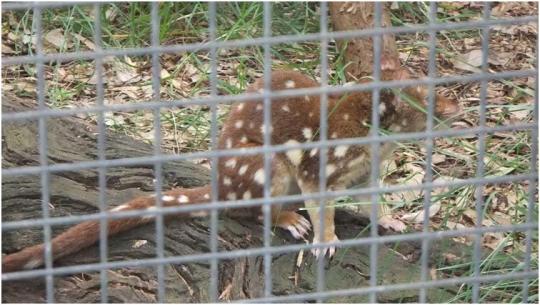
Wildlife Carers Group Map of Memorial Kangaroo Park and Wildlife Sanctuary
|
Last year’s, 2016, was the biggest cull since 2011, with 1989 animals violently and inhumanely shot and another 800 pouch young violently killed.


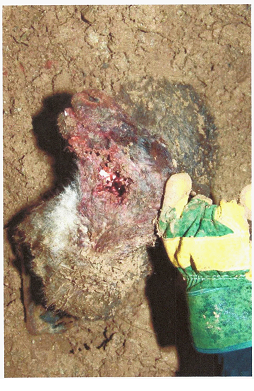

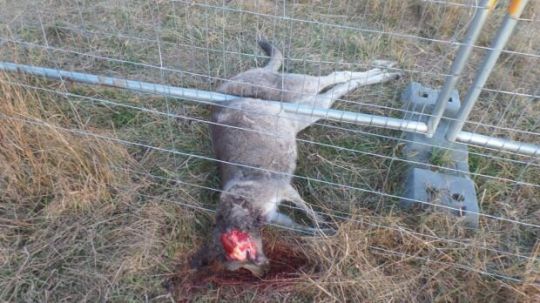
2015 ACT Government violent killing. Vet report says this Kangaroo was hit by a vehicle and then stabbed to death. Only the Government had access to drive around inside this complex.
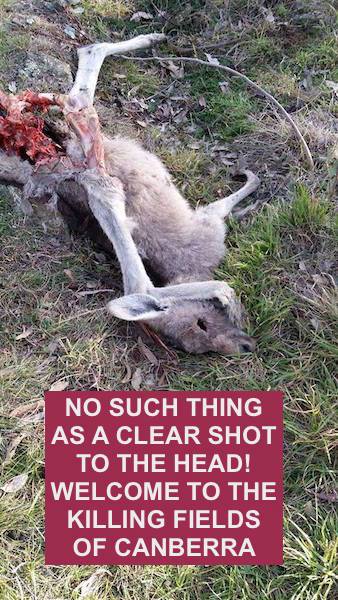
2014 UNLAWFUL, VIOLENT GOVERNMENT KILLING OF A JOEY

2015 unlawful violent ACT Government killing of protected Eastern Grey Kangaroos. In breach of the Animal Welfare Act, the Code of Practice, the Wildlife Protection Laws.

2008 BNTS Kangaroo cruelty

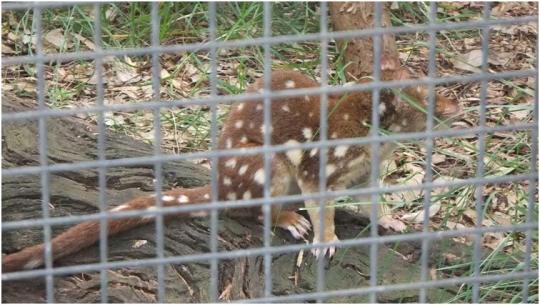


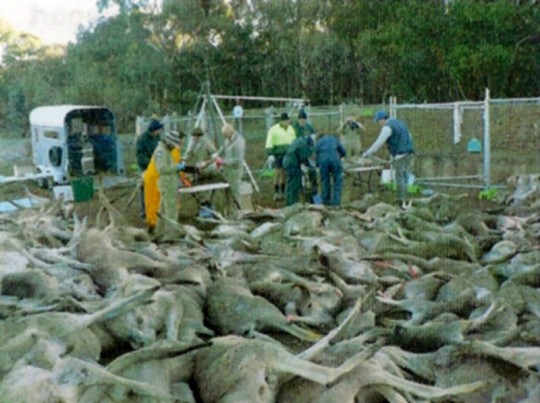
Wildlife Carers Group Map of Memorial Kangaroo Park and Wildlife Sanctuary

2015 unlawful violent ACT Government killing of protected Eastern Grey Kangaroos. In breach of the Animal Welfare Act, the Code of Practice, the Wildlife Protection Laws.

2014 UNLAWFUL, VIOLENT GOVERNMENT KILLING OF A JOEY

This poor Joey was bashed, stabbed, and then while suffering from all the injuries, was buried alive, that then died from asphyxiation, as shown by the Vet Report.


Mobile: 0406 056 099
Email: wildlife_carers_group@yahoo.com.au
Website: http://wcg.awardspace.comhttps://wildlifecarersgroup.wordpress.com/?sn=lhttp://www.myspace.com/wcginc Check out http://www.myspace.com/wcginc and become a friend. We are also on Facebook, https://www.facebook.com/nora.preston.16 with photos included on the site, and become a friend. If the link doesn’t work copy and paste it into your browser. You need to have your own Facebook profile to see our posts. You can now follow us and join us on Twitter http://twitter.com/wildlifecarersg/, http://canberra.climatexchange.org.au/wildlife-carers-group
Email: wildlife_carers_group@yahoo.com.au
Website: http://wcg.awardspace.com (we haven’t been able to update this website, we have tried)
https://wildlifecarersgroup.wordpress.com/?sn=l
http://www.myspace.com/wcginc Check out http://www.myspace.com/wcginc and become a friend.
We are also on Facebook, https://www.facebook.com/nora.preston.16 with photos included on the site, and become a friend. If the link doesn’t work copy and paste it into your browser. You need to have your own Facebook profile to see our posts.
You can now follow us and join us on Twitter http://twitter.com/wildlifecarersg/,
http://canberra.climatexchange.org.au/wildlife-carers-group
Disclaimer: WCG and the author do not assume or accept any responsibility and shall not be liable for the accuracy or appropriate application of the information contained in this letter/email/blog/report/article.
FRANKIE SEYMOUR’S PETITION STARTED IN 2014 UPDATED 2015 ON STOP KANGAROO KILLING.
The Australian Capital Territory (ACT) government has announced yet another slaughter of eastern grey kangaroos (EGKs) on its own nature reserves in the winter of 2015.
The government claims, without any coherent supporting evidence, that kangaroo grazing is a threat to the very ecosystems of which kangaroos have been an integral part for around five million years. The government continues to slaughter these creatures, despite having done no work to monitor or evaluate the impact or effectiveness of the killing program.
As well as being an ecological disaster, the slaughter causes immeasurable suffering to the animals. Adults that do not die instantly from the first shot are stabbed and clubbed to death, or escape to die slowly of their wounds. Even the survivors often injure themselves in their panic, or die on the roads trying to escape, or live to suffer the emotional distress and disruption to the mob’s social structure. Pouch young and young at foot are bludgeoned to death or left to starve.
In his response to this petition in 2014, Minister Shane Rattenbury implies that eastern grey kangaroos are a threat to species such as Grassland Earless Dragons, the Striped Legless Lizard, Perunga Grasshoppers, Coorooboorama Raspy Crickets and Ginninderra Peppercress. At the Administrative Reviews of 2013 and 2014, this claim was shown to be completely untrue. In fact, in an adjoining reserve just across the NSW border, where kangaroos are never culled, several of these species are recovering far more quickly than on the ACT reserves where massive kangaroos culling is conducted every year. The government’s own ecologist admitted that the government’s assertions about kangaroos being a threat to vulnerable species were just “PR”.
Rattenbury asserts that “critical conservation areas are under threat from overgrazing by kangaroo populations, which leads to a deterioration in the quality of the grasslands. This in turn puts pressure on the species that rely on this habitat”. In fact, the ACT government has consistently failed to produce any evidence that kangaroos (other than in captive situations) ever have overgrazed any area. The evidence shows that these animals manage their own populations without human intervention. Overgrazing in Australia is the sole preserve of introduced animals, such as sheep and cattle, which damage the fragile, shallow soils with their heavy bodies, low grazing and hard hooves.
Rattenbury asserts that “conditions in the ACT region are very favourable for Eastern Grey Kangaroos, contributing to an extremely high kangaroo population. Eastern Grey Kangaroos are the most numerous species of macropod in Australia, and their conservation status is not threatened.” Many ecology experts who have actually studied the population dynamics of eastern grey kangaroos consider their numbers to be in steep decline and deep trouble, both in the ACT region and throughout their range.
Rattenbury asserts that “the numbers to be culled have been based on scientific kangaroo counts in each location. This has been compared to the sustainable carrying capacity for each area that ACT Government ecologists have established by taking into account the habitat requirements of grassland dependent animals and plants.” Independent ecology experts have disputed (1) the government’s models for determining the sustainable kangaroos carrying capacity of reserves, (2) their methods for counting them, and (3) their models for estimating actual numbers. The government is well aware of this expert criticism of their calculations.
Rattenbury notes that “the ACT Government has since undertaken a peer review of how cull numbers are determined, which supported the ACT Government’s continuation of kangaroo management activities this year.” This so-called peer review has itself been peer-reviewed, most unfavourably, by a retired CSIRO plant scientist with vast experience in evaluating peer reviews.
Rattenbury asserts that “The conservation cull will be conducted according to a strict Code of Practice that has the endorsement of all relevant authorities including the RSPCA.” In fact, Rattenbury has rejected the Code of Practice prepared and recommended by his own Animal Welfare Advisory Committee in favour of the “national” code of practice which provides a lowest common denominator model intended as a baseline for states to their develop their own codes of practice.
In 2012, at least one of the culled kangaroos was found to have been shot, stabbed and bludgeoned before dying of suffocation and/or blood loss. In 2014, the government’s own expert witness admitted that, during each cull, an entire generation of young at foot are routinely left orphaned to starve or otherwise die without adult protection.


Recent Comments